Unknown's avatar

Immersion Workshop 7/22-26

marshallinternational

A Visionary Adventure across Continents:”

The Marshall Immersion Workshop, July 22 – 26, 2013


The George C. Marshall International Center announces the 11th Annual Marshall Immersion Workshop, promising an exciting professional and collegial experience for high school-level American and modern European history teachers, and social studies supervisors. During the workshop, all expenses – food, lodging, and transportation – are covered and participants receive a $200 stipend, free materials, and re-certification points.


The workshop focuses on the far-reaching impact of the European Recovery Program (ERP) commonly known as “The Marshall Plan.”  The week-long program begins at Marshall’s museum home, Dodona Manor, in Leesburg, VA. Using a series of primary documents from the Truman Library and the Marshall Archives, participants will gain a better understanding of the life and remarkable legacy of Secretary of State Marshall, specifically his significant role in securing the passage of the ERP.


Through a partnership developed with the United States Department of State, participants will have the unique opportunity to experience an afternoon of learning at the department’s United States Diplomacy Center in Washington, D.C., and will have a tour of the historic diplomatic reception rooms there.


Participants will complete the week at the Marshall Museum and Library in Lexington, Virginia. There they will study original documents, including his personal copy of the June 5 Harvard speech outlining the key concepts of the ERP, that relate to and reveal the background of some of Marshall’s most important decisions.

In addition to the planned ten participants from the United States, it is expected that six teachers from Europe (Norway, Austria, and Germany) will be attending this year’s workshop.  This will provide an opportunity for interaction through the exchange of ideas and perspectives on how the workshop materials and content might benefit their respective classroom instruction.

The attached document contains more complete descriptive details, the benefits and requirements of the workshop, as well as an application form.  Persons interested in applying may use the attachment or may also simply log onto the George C. Marshall International Center website at www.georgecmarshall.org.   On the homepage, click on Programs & Events, then Education Programs, then Marshall Immersion Workshop.  The application deadline is March 15, 2013.

COURTESY:

Joey Wiseman                 

Robert “Joey” Wiseman Jr.

Social Studies Coordinator

Office of Instruction

Unknown's avatar

GIS Training Opportunity

As many of you know the WVDE has a license for the ESRI GIS/ARCVIEW software to use in every classroom in the state.  We will be holding a one day session for beginners on March 9, 2013.  We will be featuring both the software and the online version.

This will be a one day session that will not start until 9AM, so we will not be providing travel reimbursements or overnight accommodations.  However, we will provide breakfast, afternoon snack, and lunch as well as a $200.00 Stipend for your completion of the workshop which includes the completion of a 1 page lesson plan.

If you are interested in attending this training please complete the application on the link at the bottom of the page.  I look forward to seeing you and please try and take advantage of this amazing program.

Geographic inquiry and geographic information system (GIS) technology are important tools that help educators, students, and their institutions answer personal and community questions with local to global implications.

Today, more and more schools are including GIS in their curricula to help their students gain valuable background knowledge and skills with which to face global challenges.

Please register early only 40 participants will be chosen.  The participant breakdown is as follows:

  • ·         8 Elementary and/or Secondary Language Arts Teachers
  • ·         8 CTE Teachers
  • ·         8 Secondary Math Teachers
  • ·         8 secondary Science Teachers
  • ·         8 Secondary Social Studies Teachers
  • ·         Teachers of Special Education are encouraged to apply; please select one of the areas above that most represents your daily work schedule.


Registering does not mean you will be registered since we only have so few slots for each content area.  We will create a waiting list because many times people drop at the last moment. If certain content areas are not filled, those slots will be filled by others.

Participants will be notified of their attendance by February 8, 2013.  If we have a large interest we will offer additional trainings either in late spring or early summer.

Click here to register:  https://docs.google.com/a/wvde.k12.wv.us/spreadsheet/viewform?formkey=dGJjM1NRcGhWRkRDWlJNOTVaOEM4OWc6MQ

Or go to http://tinyurl.com/GIS2013

If you have questions please direct them directly to Joey Wiseman, the social studies coordinator at rjwisema@access.k12.wv.us


Joey Wiseman                 

Robert “Joey” Wiseman Jr.

Social Studies Coordinator

Office of Instruction

Unknown's avatar

Fayette Student’s Work on WWII Website

Fayette Student’s Work Featured on WWII History Website

January 07, 2013

CHARLESTON, W.Va. – A Fayette County student and a top finisher in West Virginia’s National History Day Competition has written information for a website featuring contributions Americans made during World War II.

Fairan Gill, an eighth grader at Nuttall (now ANSTED) Middle School, was one of 51 students named a National World War II Museum’s “Salute to Freedom” award winner. She and the other students won an all expenses paid trip to New Orleans to participate in the grand opening of the U.S. Freedom Pavilion: The Boeing Center.

Gill finished second in the West Virginia contest for an essay and exhibit about the Battle of Blair Mountain to earn the right to advance. The national competition called on qualifying students to submit an application and respond to two essay questions. Winners were then chosen based on their knowledge of the past and its connection to the future as well as their knowledge of their state’s role in World War II.

Gill’s essay won her the opportunity to further write about West Virginia to be featured online. Her essay includes information on Chuck Yeager, a Hamlin native known for breaking the sound barrier, as well as facts about African-Americans, who studied at West Virginia State College and went on to become pilots. Her page and those created by students in other states are posted online athttp://salutetofreedom.org.

http://salutetofreedom.org/wv.html

*********************************************************************

West Virginia & World War II Training Programs
Fairan Gill, Fayette County Schools

The world changed in 1939 as Germany invaded Poland and began World War II. America did not enter immediately but knew that the possibility was there. One idea to prepare for war was to take the best and brightest young men and educate them in programs to take on certain jobs in the military. The Civilian Pilot Training Act was one of the first programs to train pilots and was a starting point for entry into the Army Air Corps. Another program, the Army Specialized Training Program (ASTP), was implemented to educate men for certain roles in the Army. West Virginia was honored to have these programs in two of their colleges. Most importantly, these programs allowed barriers between blacks and whites to be addressed and broken down so that all could serve their country.

The first program began in 1939 when the Civilian Pilot Training Act was passed. This program allowed African Americans to be trained as civilian pilots. West Virginia State College was one of six colleges to offer this course on September 10, 1939. Pilot training would begin November 14, 1939. The fight for African Americans to become officers and pilots in the Army Air Corps would keep going. West Virginia State lost the bid to offer training for officers or pilots that would go to the Tuskegee Institute in Alabama. Instead, West Virginia State president Dr. John Davis was asked to nominate graduates of the Civilian Pilot program to the “Tuskegee Experience.” Dr. Davis nominated George Spencer “Spanky” Roberts and Mac Ross who had graduated from the Civilian Pilot Training Program. George “Spanky” Roberts, from Fairmont, WV, graduated in 1939 with a Bachelor of Science in Mechanic Arts. Mac Ross, from Dayton, OH, was a 1940 graduate from WV State.

These men started classes with 11 others in 1941 at the Tuskegee Institute. In March 1942 they became two of the first five to graduate from the program. Both became Second Lieutenants and among the first to receive their wings in the Army Air Corps. Lieutenant Roberts was placed in command of the 99th Fighter Squadron. The 100th Pursuit Squadron would be led by Lieutenant Ross. Both of these squadrons would join and make up the 332nd Fighter Group, first led by Colonel Benjamin Davis Jr. and then by Lt. George “Spanky” Roberts. By the end of the war, George “Spanky” Roberts had flown over 100 missions and would become Senior Air Corps ROTC instructor at Tuskegee and became the Dean of the school of Military Science. He reported to Langley Air Force base in 1950 and become the first African American to command a racially mixed unit.

Rosie Cousin, from Fairmont, WV, became the first woman accepted into the WV State College pilot program. She was 16 when she attended WV State to get a degree in Business Administration. While there she applied and was accepted to the Civilian Training Program after passing the same mental and physical test that the men did. She became the first African American woman to get her pilot license as she completed the rigorous training under the program and completed her solo flight. She did go to Tuskegee with the others to enter their program and was turned away because of being a woman.

The Army Specialized Training Program (ASTP) was a short lived education program to develop officers or specialist to enter the Army ready to take on necessary roles. Top officials were concerned that if the war would last beyond 1944 certain roles would see a shortage of men to fill them. These roles involved areas of engineering, medical fields and foreign languages that calls for a college education. West Virginia University in Morgantown was one of the 221 colleges chosen for officer training for whites. West Virginia State College, which had the Civilian Pilot Training Program and the first artillery ROTC program, was one of the six chosen to serve the African American population for training. Men reported to these campuses by April and September 1943 to begin their education. Their day would involve “supervised activity, minimum of 24 hours of classroom and lab work, 24 hours of required study, 5 hours of military instruction, and 6 hours of physical instruction.” (Louis E. Keffer, The Army Specialized Training Program in World War II)The program was cut as the outlook of war changed in 1944 as preparation for the Normandy invasion took place.

These programs that West Virginia was honored with allowed us to contribute to the war effort through education. Through these education programs we addressed barriers that had far-reaching effects even after the war ended.

http://salutetofreedom.org/wv.html

***********************************************************************

For more information, contact the Office of Communication at (304) 558-2699

Congrats to Fairan!!!!

Courtesy 

Joey Wiseman

WVDE Social Studies coordinator

Unknown's avatar

West Virginia’s Sesquicentennial

The West Virginia Division of Culture and History is preparing for West Virginia’s 150th birthday, our Sesquicentennial. The West Virginia Civil War Sesquicentennial Commission has sponsored a website full of information, resources, and an interactive timeline.  Please visit the site at http://www.civilwar150.wv.gov/Pages/default.aspx

Sesqimage005

Child of the Rebellion: An Archives and History Sesquicentennial Project

Commemorating the sesquicentennial of the Civil War in West Virginia and West Virginia statehood, “Child of the Rebellion” contains a timeline of events, 1861-1865, and a weekly timeline trivia question, digital images of letters from the Union militia portion of the Adjutant General’s Collection, Civil War and Statehood photographs, lists of recruiting officers and African American soldiers from West Virginia, and more.

 Courtesy:

Joey Wiseman                 

Robert “Joey” Wiseman Jr.

WVDE Social Studies Coordinator

Office of Instruction

Unknown's avatar

WV Legislature Audio Streaming

The WV Legislature features a live streaming Audio webcast of Official Proceedings at: http://www.legis.state.wv.us/live.cfm

The complete 2013 Legislative Calendar can be found at:http://www.legis.state.wv.us/Bulletin_Board/calendar_2013.cfm


If you are interested there will be a live stream of the Governors Inauguration online.

SCHEDULE  Monday January 14, 2013
For complete coverage, watch myZtv or the live feed available on WSAZ.com

10am: Inauguration parade [Live on myZtv and WSAZ.com]
12pm-1pm: Pre-inauguration coverage on myZtv, WSAZ.com, and WSAZ Charleston [ what’s this? ]
1pm: Inauguration ceremony [Live on myZtv and WSAZ.com]

http://www.wsaz.com/news/politics/misc/37810389.html


I would wait and project this page once you click to watch, the main page has several advertisements.

Also the WV Legislature features a live streaming Audio webcast of Official Proceedings at:http://www.legis.state.wv.us/live.cfm

The complete 2013 Legislative Calendar can be found at: http://www.legis.state.wv.us/Bulletin_Board/calendar_2013.cfm


 Courtesy:

Joey Wiseman                 

Robert “Joey” Wiseman Jr.

Social Studies Coordinator

Office of Instruction

Unknown's avatar

Summer Institute for History Teachers!

NHD Announces a New Summer Institute for History Teachers!

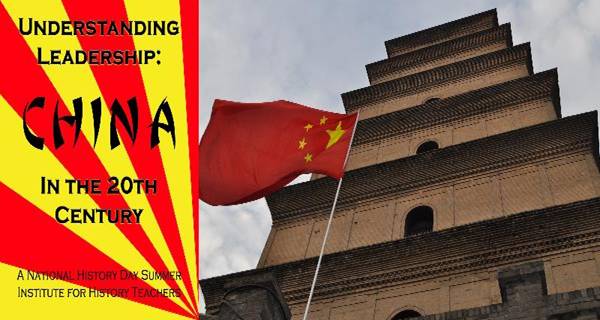
chinaimage001

National History Day announces an exciting and unique summer institute for history teachers. Twenty teachers will be selected to participate in a two-week program in China. Teachers will be immersed in lectures presented by leading historians, participate in scholarly discussions with historians, meet with Chinese history teachers and walk in the footsteps of history in Shanghai, Nanjing, Changsha, Xi’an and Beijing.

If you are a History Teacher or know a History Teacher that is interested in applying follow the link below and apply today!

http://www.nhd.org/2013ChinaInstitute.htm

Courtesy:

Joey Wiseman                 

Robert “Joey” Wiseman Jr.

Social Studies Coordinator

WVDE Office of Instruction

Unknown's avatar

African American Black History Month

Martin Luther King, Jr. Day is Monday, January 21st, 2013 and it is time to plan  some good activities on African American History as we move through January.

February  is African American Black History Month, and here are some good resources to start your lesson planning.  

The theme for 2013 is “The 150th Anniversary of the Emancipation Proclamation and commemoration of 50th Anniversary of the March on Washington. ”  Check out the  “Association for the Study of African American Life and History” website for information and resources.  http://asalh.org/blackhistorythemes.html

West Virginia teachers:

e-WV: The West Virginia Encyclopedia (www.wvencyclopedia.org) is a valuable resource for you and your students during Black History Month. The website includes several articles about the African-American experience:

African-American Heritage: http://www.wvencyclopedia.org/articles/27

African-American Education: http://www.wvencyclopedia.org/articles/26.

African-American Coal Miners: http://www.wvencyclopedia.org/articles/25

e-WV also features numerous articles about prominent African-Americans:

Educator Booker T. Washington: http://www.wvencyclopedia.org/articles/890

Historian Carter G. Woodson: http://www.wvencyclopedia.org/articles/1346

Legislator Minnie Buckingham Harper: http://www.wvencyclopedia.org/articles/259.

Students can test their knowledge of African-American history in the Mountain State by taking one of the many quizzes included on the site:  http://www.wvencyclopedia.org/quizzes/25

 e-WV, available to anyone with an Internet connection, includes more than 2,200 articles as well as thousands of illustrations.The online encyclopedia is a project of the West Virginia Humanities Council, which published the print version of the West Virginia Encyclopedia in 2006. If you are already using e-WV in the classroom, thank you! Let us know what you think of the site and how we can improve it.

Courtesy:

Becky Calwell, Editor

West Virginia Humanities Council

1310 Kanawha Blvd. E.

Charleston, WV  25301

www.wvhumanities.org

Unknown's avatar

Liberty Day Project

Liberty Day Project

http://libertyday.org

Founded in 1996 by Andy McKean and his late wife, Kathy, Liberty Day is a nonprofit 501(c)(3), nonpartisan organization dedicated to educating all Americans, but especially the next generation, about the contents of the Constitution of the United States.

Liberty Day Kids with a Colorado State LegislatorLiberty Day and its programs are about working with educators and community organizations to ensure that every child in America knows and understands the essentials of our founding documents. Unlike many self-described nonpartisan organizations, Liberty Day truly strives to be just that. We reach out to Democrats and Republicans alike and have received endorsements from numerous members of both parties, along with independents. Liberty Day is firmly dedicated to the principle of educating youth with no opinions and no interpretations—just the facts.

Liberty Day KidsWhat do we do?

Liberty Day provides teachers with aComplete Educational Resource on the U.S. Constitution. This resource consists of a Teacher’s Packet containing a full lesson plan, two evaluation forms, and a multiple choice pre-test and post-test with which to assess the knowledge gained by the students. These materials accompany the Liberty Day Booklet containing the Declaration of Independence, Constitution, and 24 perforated Q&A flashcards on the contents of the Constitution.

The Complete Educational Resource, which was developed by Liberty Day in cooperation teachers, curriculum leaders, and other partners within the field of education, is expressly designed to provide educators with the tools they need to effectively teach the document to their students.

We work alongside members of the community at all levels—from parents and attorneys to elected officials and college studnets—to provide kids, but particularly fifth graders, with engaging and interactive lessons with outside presenters.

To discover more about Liberty Day, our mission and what we do to accomplish our goals, please navigate through the links to the right.

To learn more about Liberty Day’s exciting successes over the last year, click hereto view our 2009 Annual Report.

http://libertyday.org