Unknown's avatar

EverFi

EverFi has built an entirely new framework to help schools meet standards and teach critical skills

in such areas as Financial Literacy, Student Loan Management, Digital Literacy, and Substance

Abuse Prevention. EverFi curriculum meets both national and emerging state standards in these

subject areas. EverFi learning platforms are provided at no cost to schools, thanks to the

generous support of sponsoring partners, and will be used in more than 3,500 schools across all 50 states this year.i


EverFi enables students to learn using the latest technology, including rich media, high-definition

video, diagrams, and avatars. Our learning platforms not only track knowledge gains but also

measure student attitudes on these important topics. EverFi has nine published studies

documenting the efficacy of several of our education technology platforms.

WWW.EVERFI.COM

EverFi learning platforms are provided at no cost to schools,

thanks to the generous support of sponsoring partners. Skills

Robert “Joey” Wiseman Jr.

Social Studies Coordinator

Office of Instruction

Unknown's avatar

Thinking Geographically

Thinking Geographically About International Issues: The Choices Approach

June 26-28, 2013

Applications are  available at www.choices.edu

Application deadline is Monday, April 8, 2013.

Brown University’s Choices Program invites secondary level geography teachers to apply for a 2013 Summer Institute that focuses on using the Choices approach and curricular materials to ask What is Where, Why, and So What?

Using the scholarship and lessons found in our The United States in Afghanistan unit as a springboard, the Institute will explore how the Choices approach and curricula materials can be implemented to develop geographically literate students, capable of asking and answering the big questions in geography.

The goal of the Institute is to build a community of educators dedicated to sharing best practices for using Choices materials and approach to teach about international issues through a geographic lens.

Participants will:

Benefit from content–rich presentations by university geographers;

Be immersed in the Choices approach to teaching about contested international issues through presentations, curricular modeling, and discussions;

Share best practices and approaches for addressing complex international issues with other educators from across the country; and

Develop plans to share strategies, resources, and insights gained from the Institute with other geography educators.

Housing, meals, Choices curriculum units, and a 20-hour certificate of completion are provided.

There is no fee for the Institute, but participants are required to cover their own travel to and from Providence, RI.

Participants are expected to conduct outreach activities upon completion of the Institute. Choices will provide materials for these activities.

The Choices Program, Watson Institute for International Studies,www.choices.edu/pd/geo-2013

Robert “Joey” Wiseman Jr.

Social Studies Coordinator

Office of Instruction

Unknown's avatar

3 Rivers WV Documentary

image001

A new 90-minute documentary from West Virginia Public Broadcasting explores the economic, environmental, cultural, historical and geographic impact of the largest federally protected system of rivers east of the Mississippi. Three Rivers: The Bluestone, Gauley and New examines the ongoing relationship between mankind and nature in this region. The film is a combination of travelogue, examination of efforts to improve the environment, and a mechanism for promoting economic growth through tourism.

Three Rivers is available for viewing on West Virginia Public Broadcasting’s YouTube channel.

http://www.youtube.com/user/WVPublicBroadcasting

In addition, each school and library system in West Virginia will receive a complimentary DVD for classroom use. The Department of Education will distribute these through the usual delivery channels.

If you view the documentary, alone or as part of a lesson plan, we’d love to hear your feedback so that we can improve upon future endeavors. Please send an e-mail to: feedback@wvpubast.org with Three Rivers in the subject line. Robert “Joey” Wiseman Jr. Social Studies Coordinator Office of Instruction.

Courtesy- 

Robert “Joey” Wiseman Jr. Social Studies Coordinator

Unknown's avatar

Barringer Fellowship -American History

image001

Barringer Fellows standing in front of Monticello, 2012

The Thomas Jefferson Foundation is pleased to announce the Barringer Fellowship for Teachers of American History, which is designed to provide individual teachers an opportunity to research and study at Monticello and the Jefferson Library in Charlottesville, Virginia. The two-week fellowship will allow teachers to work on Jefferson-specific projects such as lesson plans, curricular units, resource packets, or syllabus outlines that will enhance their classroom teaching and contribute to the cannon of teacher resources available online a tMonticello’s Digital Classroom. Fellowship recipients will spend two weeks in independent research and consultation with Monticello scholars on projects of their choice that relate directly to Thomas Jefferson and that will enhance their classroom instruction. Previous topics include Musical Instruments of Monticello, Thomas Jefferson and Public Education, Slavery at Monticello and more.

Applicants will be chosen by a selection committee according to evidence of their success as a teacher; demonstration that the fellowship will relate to the teaching skills and needs of the applicant; and the commitment and qualifications of the applicant to undertake a concentrated study relating to the life and times of Thomas Jefferson.

Fellowships will be awarded to qualified elementary and secondary teachers who are employed full-time in the classroom. The Barringer Fellowship grant will include: hotel accommodations during the Fellowship; a stipend of $1,500; travel costs up to $1,000; and up to $50 per day for food. Participants are asked to submit a final report detailing their research project as well as a lesson plan or educational materials suitable for publication on Monticello’s Digital Classroom. The 2013 Barringer Research Fellowship sessions will be offered in two sessions; July 22 – August 2 and again from July 29 – August 9.

To apply, please complete the Application Form and submit online or print and mail it to the address below with the additional required materials. The deadline for applications is March 4, 2013.

Mailing Address:

Linnea Grim
Hunter J. Smith Director of Education 
and Visitor Programs
Thomas Jefferson Foundation
P.O. Box 316
Charlottesville, VA 22902

FedEx/ UPS address:

Linnea Grim
Hunter J. Smith Director of Education 
and Visitor Programs
TJF Distribution Center
Ivy Business Park 
556 Dettor Rd, Suite 107
Charlottesville, Virginia 22903

The Barringer Research Fellowship Program was made possible by a generous gift from Mr. and Mrs. Paul B. Barringer II.

http://www.monticello.org/site/research-and-collections/barringer


Robert “Joey” Wiseman Jr.

Social Studies Coordinator

Office of Instruction


Unknown's avatar

Resources on Cornstalk

THE ROOTS OF UN-CIVIL WAR: 

THE 250TH ANNIVERSARY OF CORNSTALK’S CAMPAIGN


                In West Virginia, the year 2013 will be marked by numerous historical commemorative events highlighting the year 1863.   This special commemoration is fitting, for the American Civil War brought about great changes to our Nation, not the least of which was the federal recognition and creation of West Virginia as the 35th state.  Subsumed in the 150th birth year celebration is another anniversary of no less importance and perhaps with even greater impact on the future course of history in the region that one hundred years later became “The Mountain State”.  That is the 250th anniversary of Shawnee Warrior Cornstalk’s Raid on the western Virginia Euro-American settlements in the Trans-Allegheny region.  Cornstalk burst onto the scene of recorded history in 1763 when, against the British colony of Virginia, he conducted a military campaign that was arguably one of the most successful campaigns of Pontiac’s War. 

                There is little question that Cornstalk’s leadership of the Shawnee led to the most successful campaign of all American Indian operations in western Virginia.  In terms of the number of enemy settlements abandoned, the number of captives taken, and the number of enemy killed, no other field commanders’ campaigns in the region came close to Cornstalk’s success in 1763.  This campaign honed Cornstalk’s skills at war and alliance-building.  His experiences in 1763 made him a formidable foe during Dunmore’s War eleven years later, an effective peace-maker after that war, as well as an astute ally of the American cause during the beginning years of the American Revolution.  His 1763 military campaign changed the attitudes of succeeding generations of western Virginians towards their American Indian neighbors.  His murder in 1777, while he was on a peace mission to Fort Randolph, was a revenge-slaying committed by family members of western Virginians killed in 1763 by Cornstalk’s warriors.


 image001-1

Warriors swim a river while keeping their powder dry.

Ed Lowe photo.


image002-1 

A War Woman assists with a purging ritual to prepare men for war.

Mary Toy photo.


Cornstalk’s 1763 campaign took place through the Kanawha/New River valley to colonial settlements in the Greenbrier country, upper New River valley, Roanoke River, and Jackson’s River.  Throughout the year 2013, the living history educators of Trails, Inc. will be commemorating this history-changing event in West Virginia’s past.  All of these events are held at state and national facilities that are school bus friendly.  We encourage public, private, and home school administrators, teachers, students, and parents, as well as the general public to take advantage of this once-in-a-lifetime opportunity to learn of the cultural differences that led to conflict between the Shawnees and Trans-Allegheny Virginians in 1763.  Cultural life-ways, such as warrior camps, Virginia settler forts, prisoner treatment, food gathering/growing, gender roles, children’s activities, and language, will be explored through lecture, living history demonstration, and hands-on activities.  The opportunity to interpret Cornstalk’s Raid in an audience-interactive, multi-faceted manner, with an unbiased treatment of all sides in the conflict, will never be better.  The scheduled public events are in Mason, Kanawha, Fayette, Summers, and Greenbrier Counties.  Bordering counties’ schools are welcome to participate as well.  Please contact the facility which you are interested in visiting during its scheduled event to make arrangements.  You may also visit www.trailsinclivinghistory.com/page2.html for more history interpretation information.


 image003-1

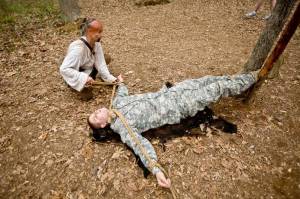
A soldier of America’s modern armed forces demonstrates an 18th century American Indian prisoner stock.

Dianne Anestis photo.


image004 image005 image006 image007 image008 

Douglas McClure Wood

Trails, Inc.  304-550-1006  chingwe1755@yahoo.com

Thanks to the following institutions for their financial & technical support:

 New River Gorge National River, Monongahela National Forest, & Trails Inc.


THE ROOTS OF UN-CIVIL WAR: 

THE 250TH ANNIVERSARY OF CORNSTALK’S CAMPAIGN

2013 SCHEDULE


At each of the following locations except Lake Sherwood, the setting for interpretation will be an 18th century warrior camp outdoors, with indoor facilities for inclement weather.  Living history interpreters will highlight Shawnee women’s and men’s social roles. Other demonstrations will be tailored to each site. Some of the events will take place before school lets out for summer.  We encourage teachers to plan field trips to join us then.  Some events will take place after school lets out.  Please make your students aware of these summer programs so they can visit during their summer break.  The WV State Parks website highlights this summer program at www.wvstateparks.com/summerperf.html andwww.wvstateparks.com/CornstalkRaid.pdf  .

May 4, 10AM-3PM –Kanawha State Forest.  There will be a special focus on Nonhelema, Cornstalk’s sister, and her historical role as peacemaker after the 1763 campaign.  One interpreter will lead a medicinal, edible, useful plant fiber walk to highlight Shawnee knowledge of native plant uses.  Other interpreters will demonstrate warrior/hunter skills, including communication signs and symbols, trail food preparation, as well as tracking prowess.  Since numerous captives were taken on the campaign, prisoner treatment will be demonstrated as well.  The campaign circuit was between 300 and 500 miles long, so long-distance travel considerations will be demonstrated and discussed.  Interpreters (one dressed and accoutered as a partisan fighter and another dressed and accoutered as a mid-19thcentury Virginian farmer) will highlight the cultural inheritance of Civil War era war tactics, agricultural practices, etc. from Shawnee to western Virginian.  Contact Kanawha State Forest, www.kanawhastateforest.com/,kanawhasf@wv.gov304-558-3500.

 –June 1, 10AM-3PM –Tu-Endie-Wei State Park.  There will be a special focus on Nonhelema, Cornstalk’s sister, and her historical role as peacemaker after the 1763 campaign.  Fort Randolph Terrace will host a powerpoint presentation on 18th century Shawnee culture and history.  Interpreters will lead an interpretive walk along the adjacent floodwall to explain the Shawnee-Virginian history highlighted on the beautiful frescoes.  They will also demonstrate warrior/hunter skills, including communication signs and symbols, trail food preparation, tracking prowess, and long-distance travel techniques.  On this same day, the Brigade of the American Revolution will be at Fort Randolph nearby.  The reconstructed fort will be the scene of Revolutionary War era demonstrations open to the public all day.  By the time of the Revolution, Cornstalk had become a principal chief of the Shawnee, when he visited Fort Randolph.  The two events are complementary and will provide plenty of history education opportunity.  Contact Tu-Endie-Wei State Park,www.tu-endie-weistatepark.com/tuendieweisp@wv.gov304-675-0869.

June 19, 7PM-9PM –Lake Sherwood Recreation Area.  At the campground amphitheater (or a picnic shelter in inclement weather) an interpreter will make a living history presentation with question and answer session while dressed & accoutered as a Shawnee warrior on the 1763 campaign.  Bring your own chair & bug repellant.  Contactwww.fs.usda.gov/recarea/mnf/recreation/wateractivities/recarea/?recid=7008&actid=78304-536-2144.

July 6, 10AM-3PM –Sandstone Visitor Center of New River Gorge National River.  The center’s theater will house a powerpoint presentation on 18th century Shawnee culture and history.  Some interpreters will focus on regional agricultural and wild gathering cultural practices inherited from the 18th century Shawnee, as well as lead a medicinal, edible, useful plant fiber walk to highlight Shawnee knowledge of native plant uses.  Other interpreters will demonstrate warrior/hunter skills, including communication signs and symbols, trail food preparation, tracking prowess, and long-distance travel techniques, with a focus on regional trails, including the one that crossed New River in the viewshed of the visitor center.  Contact www.nps.gov/neri/planyourvisit/sandstone.htm304-466-0417.

September 7, 10AM-3PM –Hawks Nest State Park.  Some interpreters will focus on regional agricultural and wild gathering cultural practices inherited from the 18th century Shawnee, as well as lead a medicinal, edible, useful plant fiber walk to highlight Shawnee knowledge of native plant uses.  Other interpreters will demonstrate warrior/hunter skills, including communication signs and symbols, trail food preparation, tracking prowess, and long-distance travel techniques.  Prisoner treatment will be demonstrated as well.  Interpreters (one dressed and accoutered as a partisan fighter and another dressed and accoutered as a mid-19th century Virginian farmer) will highlight the cultural inheritance of Civil War era war tactics, agricultural practices, etc. from Shawnee to western Virginian.  Contactwww.hawksnestsp.com/hawksnestinfo@wv.gov304-658-5212.


COURTESY

Robert “Joey” Wiseman Jr.

Social Studies Coordinator

Office of Instruction

Unknown's avatar

Presidents’ Day Lessons

image001


Presidents’ Day Lessons to Inspire Your Students

The Center for Civic Education is proud to offer Presidents’ Day lessons for grades 4-12. These free, ready-to-use lessons will engage your students in learning about these important presidents and how they shaped the history and Constitution of our nation. Each lesson was written and reviewed by scholars and contains questions to test student knowledge. Learn more

image002

Teaching Resources for Black History Month

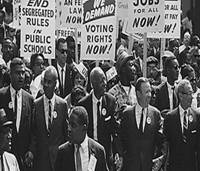
Examine the power of nonviolence this Black History Month with five lessons for grades 5-12. Using readings, videos, and podcasts, students learn about the use of nonviolence in history, paying particular attention to the civil rights movement and African American history. Learn moreimage003

Courtesy:

Robert “Joey” Wiseman Jr.

Social Studies Coordinator

Office of Instruction

Unknown's avatar

WVWrites Social Studies Prompts

WVWRITES SOCIAL STUDIES PROMPTS

 As you have noticed the WVWRITES social studies prompts keep vanishing off of the WVWRITES website, so I thought I would just post some of them here as a resource for you to use with your students.  Hopefully we will soon get these to stay on the WVWRITES site in the near future, but hopefully this will help in the short term.  I will be adding more to this list soon!

8th

What are some things American communities do to celebrate patriotic holidays?

Why are some holidays considered “more patriotic” than others?

Imagine that something is happening in our county that impact things like our school. police protection, fire service, our library, or perhaps the name of the street where you live.  Using these scenarios explain (who, what, where and why) you would contact in government to try to make a difference.

The three branches of our federal government does not allow one branch to have total power by sharing power between branches.  How does our checks and balances system work in West Virginia government?

How does a bill become a law in West Virginia?

What is the difference in a “primary” and a “general” election in West Virginia? 

 What are things that West Virginia produces that we sell to other states and nations?  If any of these things are done locally describe them and tell what it takes to make that business succeed.

 Why do some West Virginia counties do well economically while others have few jobs and small populations?

West Virginia is heavily influenced by its rivers and mountains.  Why are many of our larger communities located on our three major rivers?

What sections of the state depend the most on tourism, and how do we attract visitors to vacation here?

When West Virginia became a state why were our “founding fathers” all from northern West Virginia?

What brought many immigrants to West Virginia at the start of the 20th Century?  Where did they settle and how did it impact sections of the state?

9th

How and why did European nations choose different ways (routes, strategies, colonization, etc) in the Post-Renaissance era to trade with Asia?

During the Renaissance how did science lead people to question the Church?

What was the cultural and social impact of European colonization upon Africa?

Why was it so easy for England and France to colonize Africa, and how did they deal with those they conquered?

How did China’s isolationist policies lead to different writing, language, government, and culture?

Which Enlightenment concepts had the greatest impact on American government?

Why and how did the emphasis on “the individual” lead to a split into the Renaissance church?

What modern laws and beliefs exist due to Christians and Jews dominating society?

In the Middle Ages why did people follow dictates of monarchs without question or opposition?

Why are the Pacific Rim nations so successful in industry today?

What aspects of our modern government and culture are based upon influences from Greek and Roman government and culture? 
How did leaving a nomadic life and settling in the Fertile Crescent create a cultural need for laws, religion, and writing?

10th

How did the Northern and Southern plans to win the Civil War differ and what was the result?

What were the different approaches in settlement of the New England, Middle and Southern colonies? How did this influence their cultural development?

How did Lincoln’s Emancipation Proclamation make the war a moral issue for the north?

Why did so many Europeans choose to come to America at the turn of the 20th century in the face of difficulties of language, social differences, and prejudices?

How did vast raw materials combine with new technologies to move the American economy to the world stage?

How did the diverse North American environment influence native American cultures?

How did Lincoln’s death allow his political rivals to change reconstruction to a punishment for ex-confederates and what was the result?

In the Revolutionary War how did George Washington’s tactics of guerrilla warfare frustrate British warfare and lead to success?

 How did the English view Parliamentary Taxation Acts, and how did this lead to colonial resistance?

How did Spanish Colonization differ from English colonization of the Americas, and what evidence can we see today of these different influences in the USA?

11th

How did the growing importance of the automobile, the radio, movies and new industries improve the standard of living and change our culture?

What was the long term effect of FDR’s policies and philosophies of dealing with the Great Depression?

What impact did the administrations of John F. Kennedy and Lyndon B. Johnson have on American society?

How has America responded to new challenges (Global Warming, Terrorism, Energy, Mid-East stability, Health issues, Economics, etc) facing the nation in the 21st Century?

How would you contrast/compare the culture of the 1950s with today?

How would you contrast/compare the culture of the 1950s with today?

How did Teddy Roosevelt’s policies expand American influence worldwide?

 The Treaty of Versailles officially ended WW I, but what problems did it cause between European nations that would lead to future conflict? 

How did the United States of America and Union of Soviet Socialist Republics influence the shaping of the post war world?

 How was the war in the Pacific different from that in Europe?

 Why did most of the early fighting of World War II take place in Europe?


12th

Identify major conflicts in the global community and relate this to contemporary issues in the United States of America.

 What are the rights guaranteed to all citizens by the Bill of Rights and how do we use them daily?

 Why would a local government pursue a company to locate within its tax base instead of outside of town or elsewhere? 

 How do personal savings, spending, and investing affect the economy as a whole?

What are the extremes of political ideology, and how does this relate to the major political parties in America?

What national problems following the Revolutionary War forced the newly formed American nation to write a new Constitution?

How do special interest groups influence public policy and our laws?

What differentiates “biased reporting” and “yellow journalism” from a legitimate free and independent press? 

Unknown's avatar

House of Rep online!

U.S. House of Representatives puts its history online
A recently launched website covers the careers of 11,000 politicians who have served in the U.S. House of Representatives, making political research a little easier.

The website, which includes a database of more than 1,000 items, was created by the historian of the U.S. House of Representatives and the clerk of the House’s Office of Art and Archives. The offices seeks to represent the “House’s institutional memory, a resource for Members, staff, and the general public.”


Courtesy

Robert “Joey” Wiseman Jr

Unknown's avatar

WV History- WV Encyclopedia

 image001 

Dear West Virginia Teacher:

As you explore West Virginia history during our state’s 150th year, we encourage you and your students to turn to e-WV: The West Virginia Encyclopedia. This free and interactive website, www.wvencyclopedia.org, includes more than 2,300 articles; hundreds of photos, videos, audio clips, and maps; and a unique e-WV Classroom.

This special section of e-WV is designed just for students and teachers. The e-WV Classroom at http://www.wvencyclopedia.org/classroom provides 18 lesson plans on a variety of topics, including “The Story of Statehood” and “The Two Constitutions,” and offers links to quizzes and other important features of e-WV.

Individual articles in e-WV are also of great use to students who are exploring the topic of West Virginia statehood:

e-WV: The West Virginia Encyclopedia is a project of the West Virginia Humanities Council. Contact us if you have questions, suggestions, or comments about e-WV.

Becky Calwell

Editor, e-WV: The West Virginia Encyclopedia

calwell@wvhumanities.org

304-346-8500

Unknown's avatar

Next Gen SS Clarification

FROM JOEY WISEMAN, WVDE SS coordinator 

Good morning everyone,

While visiting social studies classrooms, conducting RESA based professional development sessions, and listening to comments from the instructional materials meetings, I have discovered that there is still some confusion about the connections between WESTEST2, the Next Generation Social Studies Objectives and the Acuity Benchmarks.  I hope to clear up any misconceptions and confusion that may have come up.  Please at anytime if you are unsure about something or have a question feel free to contact me.

No new questions have been created for WESTEST 2, however there has been a realignment of the test questions to the Next Generation Standards and we are within the guidelines.  We have to remember that the major changes were the history clusters but the majority of civics, economics, and geography remained at their respective grade levels, many possibly reworded or combined.

It is very important to address the new literacy objectives. If students are able to master those literacy objectives their scores should improve on the test.  In the fall when you receive your WESTEST 2 results from the spring of 2013 the data will be aligned to the Next Generation Standards and Objectives.

The same does not ring true for the Social Studies Acuity Benchmarks.  The Next Gen. Social Studies Objectives have not been loaded into Acuity. It may be more beneficial for teachers to create their own Social Studies Benchmarks. That is something that each school staff or county leadership team needs to discuss.  The Acuity team is working on a document to assist teachers in creating their own benchmarks using the Acuity Platform.

It is important to make sure that students are aware that the Social Studies portion of the test is not a total test of specific content but a test of their skills as a historian, geographer, economist, political analyst, and etc…

The example I use is this.  There could possibly be a question on the 6th or 11th grade test about Vietnam.  There may be a letter home from a soldier to his mother and then questions. In most cases students say to themselves “I know about Vietnam” so they just go ahead and answer the questions without reading the letter. However, unless the teacher used that exact letter from WESTEST2 in the classroom, which is highly unlikely, students will not have a true understanding of the letter and be able to answer the questions correctly. They definitely will need an understanding of Vietnam and the feelings at home and abroad during that time period. Background knowledge is key here, however we have to make them understand that the questions themselves will normally  refer back to a text, map, graph, picture or chart that is provided to them and in this case a letter.  This is a strong conversation we need to have with students so they know what to expect on the test.

I think this is a misconception on the student’s part.  Students think the test is about content recall and it’s more about skill.  As you saw in that example students will still have to know about Vietnam or the letter will not make sense to them, however the test is not going to ask what Hotel in Saigon was bombed on Christmas Eve 1964.  That would be a total recall question.

Another example may be a picture of, or a poster about, the Montgomery Bus Boycott.  The test may say:  This picture or poster is from Alabama in the 1960’s and has to deal with what event?

A.   Women’s Right Movement

B.   Vietnam Protest

C.   Civil Rights Movement

D.   FDR Election Campaign

Students will need to have knowledge of all of the events mentioned above in order to make the best choice. They will use their critical thinking skills to decide which are not the correct answers and then choose the Civil Rights Movement as the correct response.   This is not a content recall question like: What was the name of the lady who refused to give up her seat on the bus?  We know the answer there would be Rosa Parks and that is a true content recall question and you will not see items like that on the test. However, if students did not have background knowledge about all 4 of the events above it would be hard for them to make the correct choice.

If you have any other questions or concerns feel free to contact me.  I want to thank each and every one of you for the job you do each day.  Enjoy your day and be careful out in the snow!

Joey

Robert “Joey” Wiseman Jr.

Social Studies Coordinator

Office of Instruction