Unknown's avatar

2015 Travel Abroad


Global Exploration for Educators Organization (GEEO) is a 501c3 non-profit organization that runs professional development travel programs designed for teachers.
GEEO is offering the following travel programs for 2015: India/Nepal, Sri Lanka, Bali/Lombok, Italy, Eastern Europe, Greece, Uzbekistan, Vietnam/Cambodia, Thailand/Laos, Belize/Guatemala, Morocco (Winter, Spring and Summer) China, Eastern Turkey, Western Turkey, Zambia/Botswana/Namibia/South Africa, New Zealand, Costa Rica, Peruvian Andes (Summer and Spring), Peruvian Amazon, and The Galapagos Islands. The registration deadline is June 1st, but space is limited and many programs will be full well before the deadline. From now until October 13th, GEEO’s spring and summer programs will be discounted an additional 5%.


Educators have the option to earn graduate school credit and professional development credit while seeing the world.  The trips are 8 to 19 days in length and are designed and discounted to be interesting and affordable for teachers. GEEO provides teachers educational materials and the structure to help them bring their experiences into the classroom. The trips are open to all nationalities of K-12 and university educators and administrators, as well as retired educators. Educators are also permitted to bring along a non-educator guest.

Detailed information about each trip, including itineraries, costs, travel dates, and more can be found at www.geeo.org. GEEO can be reached 7 days a week, toll free at 1-877-600-0105 between 9AM-9PM EST.

Unknown's avatar

Teaching Tolerance


On behalf of:  Ashley Levett

Teaching Tolerance Offers New Curriculum to Schools Nationwide

Curriculum Developed to Match Rigor of Common Core Language and Literacy Standards with Relevance for Diverse Students


MONTGOMERY, Ala. –Today the Southern Poverty Law Center’s Teaching Tolerance project released a first-of-its-kind literacy curriculum, Perspectives for a Diverse America, to help teachers across the country better engage their diverse students.


The release comes just days after the U.S. Department of Education projected that, beginning this fall, children of color – Latino, African-American and Asian students – will occupy a majority of seats in American public school classrooms.


Perspectives focuses on K-12 literacy instruction by offering a free web-based anthology of texts, teaching strategies and student tasks to promote academic achievement as well as social and emotional learning. Although the curriculum is aligned to the Language Arts and Literacy standards of the Common Core State Standards, it is compatible with any college- and career-readiness standards.


Perspectives offers teachers a wide selection of texts – some that reflect their students’ identities and others that give them windows into the experiences of those whose lives are different than their own,” said Teaching Tolerance Director Maureen Costello. “Our pilot showed thatPerspectives makes a difference – pilot teachers reported a positive impact on student literacy development, engagement, empathy and behavior.”

Perspectives is supported by the Teaching Tolerance Anti-bias Framework, which draws upon the education goals identified by Louise Derman-Sparks and Julie Olsen Edwards in their work, Anti-Bias Education for Young Children and Ourselves. These “primary goals of anti-bias education in early childhood,” include identity, diversity, justice and action.  The framework extends them through grade 12, with a set of anti-bias standards and grade-level outcomes.

“You’re creating an environment where real democracy and real equality is being practiced,” Derman-Sparks said of Perspectives. “It means that children are learning how to understand who we are and understand different perspectives and learn how to deal with different situations that come up that are not fair.”

###

 Teaching Tolerance is dedicated to reducing prejudice, improving intergroup relations and supporting equitable school experiences for our nation’s children. The program reaches hundreds of thousands of educators and millions of students annually through its Teaching Tolerance magazine, multimedia teaching kits, online curricula, professional development resources and classroom-friendly social justice documentaries. These materials are provided to educators at no cost.

The Southern Poverty Law Center, based in Alabama with offices in Florida, Georgia, Louisiana and Mississippi, is a nonprofit civil rights organization dedicated to fighting hate and bigotry, and to seeking justice for the most vulnerable members of society. For more information, seewww.splcenter.org.

The views and opinions expressed herein are those of the author or organization represented and do not necessarily reflect the views of this site, FCS,  WVDE, or its employees.

Unknown's avatar

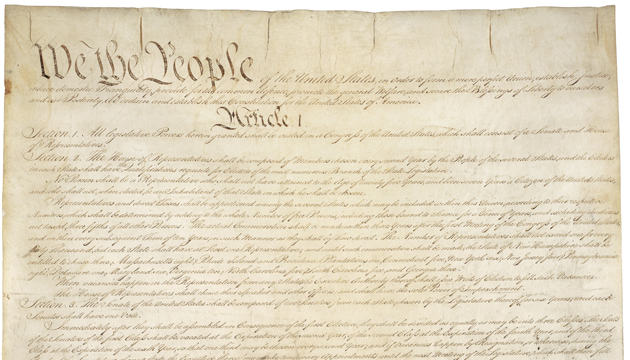
Constitution Day

image001

Constitution Day September 17, 2014

Robert C. Byrd inserted a provision into a massive spending bill that Congress passed in 2004 requiring every school and college that receives federal money to teach about the Constitution on Sept. 17, the day it was adopted in 1787. Throughout his life, the West Virginia Democrat kept a copy of the Constitution in his pocket.   I hope that each and every one of us will take a few minutes to remember Senator Byrd on Constitution Day.

The federal government does not dictate when or how We teach about the Constitution, just that we must do it. It was Senator Byrd’s intention that educators use creativity and find interesting ways to teach the lessons of the Constitution.  You may determine what kind of lesson or program you want to organize, (for example assembly, school play or reenactment, closed-circuit TV broadcast throughout the building followed by classroom discussion.) Below you will find a just a brief list of current resources available online to assist you with lesson plans, primary source documents, biographies, role-play scenarios and other activities too numerous to mention.

PBS

Constitution Center

icivics

Civic ED


Unknown's avatar

Geo Alliance FREE Grad classes!

image001-1

The West Virginia Geographic Alliance is offering West Virginia teachers the opportunity to take three graduate level courses this semester for free through Concord University.

The courses are:

  1. Teaching With Maps(Dr. Todd Sink; sinkt@concord.edu)
  2. Political Geography(Matt McCormick; history.mr.mccormick@gmail.com)
  3. Asia(Dr. Joe Manzo; manzoj@concord.edu)

    For general information contact the course instructor.

    To enroll contact Dr. Joe Manzo at manzoj@concord.edu, or call 304-384-5208.

Unknown's avatar

HOLOCAUST EDUCATION WORKSHOP


HOLOCAUST EDUCATION COUNCIL

image006

HOLOCAUST EDUCATION WORKSHOP 2014

image007

October 18, 2014

West Virginia Culture Center

Capitol Complex

Charleston, West Virginia

9:00 to 4:00 P.M.

Sessions Facilitated by Experienced Holocaust Instructors

Open to English and Social Studies Teachers

Sessions will include:

  • Construction of a timeline of the Holocaust
  • Using Resources in the Holocaust
  • Lesson plans for teaching The Book Thief
  • Arts and Poetry in the Holocaust-writing contest
  • Guidelines for teaching the Holocaust
  • An inter-comparison of social injustice during the Holocaust with the modern era
  • Guided tour of Photo documentation of the Dachau War Crimes Trial
  • Information on organizing a student trip to Germany and Poland


Teacher Resource Packets Provided By the United States Holocaust Memorial Museum

Free Parking

Lunch Provided

To register for the workshop please email Brian O’Connell

boconnell@mail.kana.k12.wv.us.

Deadline for registration: October 3rd

Unknown's avatar

US SENATE YOUTH PROGRAM

Reminder:  The 53rd Annual UNITED STATES SENATE YOUTH PROGRAM


Information was mailed to every high school in WV two weeks ago.   If you have Juniors or Seniors interested in participating please have them contact their counselor or principal as soon as possible.  The Pre-test must be given at the school during the week of September 15th.

Education • Leadership • Public Service

The United States Senate Youth Program, established in 1962 by U.S. Senate Resolution, is a unique educational experience for outstanding high school students interested in pursuing careers in public service. The annual program will be held in Washington, D.C., from March 7 – 14, 2015. Two student leaders from each state, the District of Columbia and the Department of Defense Education Activity will spend a week in Washington experiencing their national government in action. Student delegates will hear major policy addresses by Senators, cabinet members, officials from the Departments of State and Defense and directors of other federal agencies, as well as participate in a meeting with a Justice of the U.S. Supreme Court. All transportation, hotel and meal expenses will be provided by The Hearst Foundations. In addition, each delegate will also be awarded a $5,000 College Scholarship for undergraduate studies, with encouragement to pursue coursework in history and political science.


Rules for Choosing West Virginia Delegates:

The accompanying brochure lists the qualifications for applicants.  Sections will be based on outstanding academic ability and demonstrated qualities of leadership.  The West Virginia delegates will be chosen by the following rules:

  1. Regardless of race, creed, color, sex or financial need, students are eligible to be candidates for the U.S. Senate Youth Program provided they:
    • have not previously been a delegate to the program
    • are currently serving in an elected or selected capacity in any one of the following student government, civic or education organizations.
      • Student body or class president, vice president, secretary or treasurer
      • Student council representative
      • Student representative elected or selected (selected by a panel, commission or board) to district, regional or state-level civic or educational organization
      • are permanent residents of the United States, and at least one of their parents or guardians is a legal resident of West Virginia
      • are currently enrolled as a junior or senior in a public or /private school in West Virginia.
  2. Students take a test prepared by the William Randolph Heart Foundation the week of September 15, 2014.
  3. Schools submit the answer sheets and essays immediately.  All tests must be in the WVDE Office of Secondary Learning on or before September 25, 2014.
  4. Semi-finalists are selected based on the highest test scores.
  5. Six finalists are selected from the semi-finalist pool, based upon evaluation of essay scores, academic records, school activities and evidence of leadership.
  6. Each finalist makes a formal presentation and is interviewed by a committee.  The committee is composed of six professionals and/or community people who will make the final selection.  The names of the two delegates and two alternates are announced by the Randolph Hearst Foundation in December.
  7. In Identifying your school candidates to take the test, you may want to consider:
    • Leadership ability.
    • High scholastic standing.  Demonstrated ability to achieve.
    • Ability to read, write, speak and think.  (Clear speech and logical though processes are important in question and answer sessions with distinguished speakers during finalist interviews in Charleston and Washington week.)
    • Community involvement. Participation in a wide spectrum of activities on and off campus.
  1. Additional program information can be found on the U.S. Senate Youth Program website at www.ussenateyouth.org.
Unknown's avatar

Classrooms Without Borders

On Behalf of:  Dr. Tsipy Gur

Classrooms Without Borders (CWB) provides world-class professional development for teachers through study seminars that take place outside of their professional environments. History, culture, politics and current events are experienced “live” through learning tours abroad.

INFORMATION:

Classrooms Without Borders 2014-2015

Programming_ALL_v5

The exposure to ancient and modern realities from a “first-person” perspective gives teachers a greater appreciation of their subject of study and specialty. They return to the classroom highly motivated and energized, their intellectual and creative batteries recharged and strengthened.

CWB employs the very best scholars and educators to steer and accompany the teachers throughout the program.

The views and opinions expressed herein are those of the author or organization represented and do not necessarily reflect the views of the WVDE, or its employees.
Unknown's avatar

Virtual Supreme Court Competition

On behalf of:  Julie Silverbook

The Harlan Institute and The Constitutional Sources Project Host Third Annual Virtual Supreme Court Competition

High School Students Research and Debate Zivotofsky v. John Kerry, Secretary of State


WASHINGTON, DC — Building on the success of the 2013 and 2014 Virtual Supreme Court project, the Harlan Institute and The Constitutional Sources Project (ConSource) will host the third annual Virtual Supreme Court competition. This competition offers teams of two high school students the opportunity to research cutting-edge constitutional law, write persuasive appellate briefs, argue against other students through video chats, and try to persuade a panel of esteemed attorneys during oral argument that their side is correct. This year the competition focuses onZivotofsky v. Kerry, exploring whether the President’s power to diplomatically recognize foreign nations is subject to control by Congress.


The competition is endorsed by the Center for Civic Education’s We The People Program. Robert Leming, Director of the We the People Program found that the “Competition is relevant for high school students studying the Constitution and Bill of Rights.”


ConSource Executive Director Julie Silverbrook believes “the Competition is an excellent opportunity for high school students to develop core civic and constitutional literacy skills. Students are required to read the text of the Constitution, explore the history behind a contemporary constitutional dispute, and construct persuasive arguments. We know that experiences like the Virtual Supreme Court Competition leave a lifelong impression on participating students and encourages them to stay informed and engaged throughout their lives.”


The members of the grand-prize winning team, the Solicitors General of FantasySCOTUS, will receive a free trip, including airfare and one night of hotel accommodations, to Washington, D.C. to attend the ConSource Constitution Day celebration in September 2015. Winners must be at least 18 years old at the time of the trip (it is no problem if the student has already graduated high school in September of 2015, so long as he or she was in high school during the competition). This offer is open to U.S. residents only. Members of the runner-up team will each receive an iPad Mini. Members of the third and fourth place teams will each receive a $100 Amazon.com Gift card.


Josh Blackman, President of the Harlan Institute, champions the Virtual Supreme Court, which provides an “unprecedented opportunity for high school students to engage in the highest level of appellate advocacy. They research the issues, write briefs, and make oral arguments before our judges. The strong caliber of the winning teams last year really impressed us. We can’t wait to see how the teams perform this year!”


Teachers interested in participating should sign up at www.HarlanInstitute.org, add an account, read the problem, and get started!


Please send any questions to info@harlaninstitute.org or info@consource.org.


Julie Silverbrook

Executive Director

The Constitutional Sources Project

c/o Winston & Strawn

1700 K St NW, Floor 9

Washington, DC 20006

(202) 223-4759 (office)

(202) 315-3680 (fax)

(215) 901-2947 (cell)

Unknown's avatar

HOTS for Social Studies!

Higher Order Thinking Skills: HOTS Daily Practice Activities

blooms revised taxomony3 Higher Order Thinking Skills: HOTS Daily Practice Activitiesblooms taxonomy5 Higher Order Thinking Skills: HOTS Daily Practice Activities


socialstudies coach head1 Higher Order Thinking Skills: HOTS Daily Practice ActivitiesAnalyzing primary sources and documents, making inferences, determining cause and effect, interpreting maps, charts, graphs, etc., making comparisons, drawing conclusions, critical thinking, decision-making, forming generalizations, supporting with details and fact, determining facts vs. opinion, summarization, research, organize knowledge…

Higher Order Thinking Skills are the core of what Social Studies teachers teach. We do so much more than teach historical, geographic, political, or economic facts, don’t we? We teach our students how to think about their world. Our discipline is devoted to Blooms taxonomy. This also makes Social Studies and English/Language Arts natural allies in the battle for literacy. We share many curricular goals. Not to mention that the common core standards and most state standards focus on these skills- and state assessments increasingly test them.

It is essential that we emphasize these Higher Order Thinking Skills in our classrooms. In this blog I would like to share one of my favorite strategies for teaching them. I called it the HOTS Journal, but these daily warm-up activities, or bell-ringers could be done in a variety of formats and for different social studies subjects and grade levels.  The basic goal is to begin each class (or at least several times a week) with an activity relevant to the day’s learning goal, which practices one or more of the above skills. This activity can then be the starting point for the lesson of the day.

The activities generally featured a stimulus such as a portion of a primary source, document, map, cartoon, photograph, graphic organizer, etc. relevant to the lesson. I frequently used a stimulus from a released state test (such as Regents or TAKS). There are many sources for images on the internet (see my resource page) or even choose something from your textbook. I liked to create them on PowerPoint so that I could project them. This also allowed me to create some fancier things, such as conversation bubbles for photos, or allow students to resort pictures into correct column, or make an answer page showing answers placed one at a time on a graphic organizer.

manifest destiny painting Higher Order Thinking Skills: HOTS Daily Practice Activities

The students would respond to a series of questions about the graphic that would range from lower to higher levels of Bloom’s. Sometimes that might create a graphic organizer or some other product based on the stimulus. Sometimes they were brainstorm activities. Sometimes they filled-in-the-conversation-bubbles on a photo. Sometimes they answered personalized what-would-you-do questions. On some occasions they would work with a partner.


One key to success is to create questions that start as simple, fact-based, then move up the ladder to more analytical and evaluative questions that ask students to think about and make decisions about the facts. Another key is to use variety-in terms of the student product, the type of stimulus and the skill that is practiced.

colony product map Higher Order Thinking Skills: HOTS Daily Practice Activities


In my class, we went over the HOTS activity each day to assure that the students learned and understood the concepts and skills. Frequently I had students model their thinking as they answered. My students kept their responses together in a section of their notebook that I called their HOTS Journal. I collected them periodically for a completion grade. This was an easy way to hold the students accountable, but the most important thing was the daily practice of skills.

I saw my student’s scores skyrocket on standardized tests. This strategy was also very successful when, as District Social Studies Coordinator, I initiated it among the teachers of my district. It works well with grades 4 -12. For younger grades, I would encourage a modified version. Even the younger students need to be introduced to interpreting and analyzing graphics and primary sources, as well as the Higher Order Thinking Skills.

las Casas quote Higher Order Thinking Skills: HOTS Daily Practice Activities

Courtesy:  http://www.historyquesters.com/2014/09/03/higher-order-thinking-skills-hots-daily-practice-activities/

Unknown's avatar

Good Social Studies Ideas

The Internet is indeed an inestimable resource and a treasure trove of all kinds of learning and teaching materials for both teachers and students but unless we know how to dig and find such resources we would never be able to tap into its real potential.Unfortunately the abundance of resources online makes it way harder , especially for busy teachers, to sift through and find the best websites that work for them. You actually need to live in Internet if you want to do it. However , there are people who are very passionate about finding those hard-to find resources and share them with teachers and educators and I am one of them.

Over the last couple of weeks, Educational Technology and Mobile Learning has been working diligently to compile lists of free resources and websites pertaining to different subject matter. We know it is the start of a new school year and teachers would be looking for new web resources on the subjects they teach.As for today, we are going to cover Social Studies resources. Check out the resources below

1- National Council for The Social Studies

This is a great website for teachers and students. It provides free resources relating to everything about social studies.

2- World History

World History is a powerful, innovative model curriculum for teaching world history in middle and high schools.

3- PBS Teachers Social Studies

This is a web page that has great links to social studies resources organized into grade-subject categories.

4- Social Studies Theme Units

This is a section provided by Edhelper and which offers great activities and projects all geared towards a better understanding of this subject area.

5- EDSITEment

Explore the  library of humanities lesson plans by subject, theme, and grade level.Find Art and Culture lessons on anthropology, art history, folklore, mythology, religion, and more.

6- Smithsonian Education

Smithsonian offers great resources on Art and culture, history and travel, science. From interactive Idealabs to homework help and many more.

7- Lesson Plans for Social Studies

Dr, Marty Levine has gathered lesson plans and resources from the Internet which social studies teachers will find useful.

8- Outreach World

Outreach World is an online community of educators dedicated to showcasing the achievements of its members and strengthening vital links across the education spectrum, and between the United States and the world.

9- Documentary Websites for Teachers

This is a collection of free websites that provides documentaries on a variety of different topics.

10- Timelines
This is a set of free tools for teachers to create awesome timelines . Check them out .

COURTESY:  http://www.educatorstechnology.com/2012/08/10-awesome-free-social-studies.html