Unknown's avatar

Teaching Tolerance


On behalf of:  Ashley Levett

Teaching Tolerance Offers New Curriculum to Schools Nationwide

Curriculum Developed to Match Rigor of Common Core Language and Literacy Standards with Relevance for Diverse Students


MONTGOMERY, Ala. –Today the Southern Poverty Law Center’s Teaching Tolerance project released a first-of-its-kind literacy curriculum, Perspectives for a Diverse America, to help teachers across the country better engage their diverse students.


The release comes just days after the U.S. Department of Education projected that, beginning this fall, children of color – Latino, African-American and Asian students – will occupy a majority of seats in American public school classrooms.


Perspectives focuses on K-12 literacy instruction by offering a free web-based anthology of texts, teaching strategies and student tasks to promote academic achievement as well as social and emotional learning. Although the curriculum is aligned to the Language Arts and Literacy standards of the Common Core State Standards, it is compatible with any college- and career-readiness standards.


Perspectives offers teachers a wide selection of texts – some that reflect their students’ identities and others that give them windows into the experiences of those whose lives are different than their own,” said Teaching Tolerance Director Maureen Costello. “Our pilot showed thatPerspectives makes a difference – pilot teachers reported a positive impact on student literacy development, engagement, empathy and behavior.”

Perspectives is supported by the Teaching Tolerance Anti-bias Framework, which draws upon the education goals identified by Louise Derman-Sparks and Julie Olsen Edwards in their work, Anti-Bias Education for Young Children and Ourselves. These “primary goals of anti-bias education in early childhood,” include identity, diversity, justice and action.  The framework extends them through grade 12, with a set of anti-bias standards and grade-level outcomes.

“You’re creating an environment where real democracy and real equality is being practiced,” Derman-Sparks said of Perspectives. “It means that children are learning how to understand who we are and understand different perspectives and learn how to deal with different situations that come up that are not fair.”

###

 Teaching Tolerance is dedicated to reducing prejudice, improving intergroup relations and supporting equitable school experiences for our nation’s children. The program reaches hundreds of thousands of educators and millions of students annually through its Teaching Tolerance magazine, multimedia teaching kits, online curricula, professional development resources and classroom-friendly social justice documentaries. These materials are provided to educators at no cost.

The Southern Poverty Law Center, based in Alabama with offices in Florida, Georgia, Louisiana and Mississippi, is a nonprofit civil rights organization dedicated to fighting hate and bigotry, and to seeking justice for the most vulnerable members of society. For more information, seewww.splcenter.org.

The views and opinions expressed herein are those of the author or organization represented and do not necessarily reflect the views of this site, FCS,  WVDE, or its employees.
Unknown's avatar

Constitution Day

image001

Constitution Day September 17, 2014

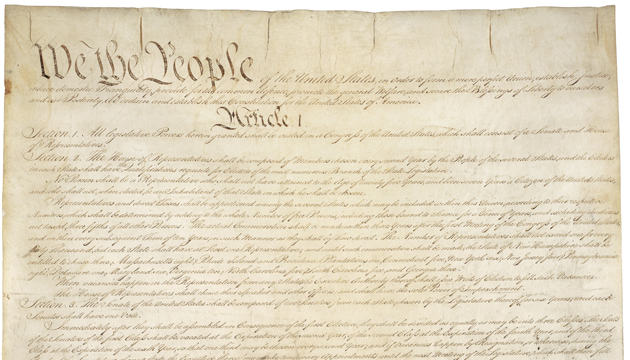
Robert C. Byrd inserted a provision into a massive spending bill that Congress passed in 2004 requiring every school and college that receives federal money to teach about the Constitution on Sept. 17, the day it was adopted in 1787. Throughout his life, the West Virginia Democrat kept a copy of the Constitution in his pocket.   I hope that each and every one of us will take a few minutes to remember Senator Byrd on Constitution Day.

The federal government does not dictate when or how We teach about the Constitution, just that we must do it. It was Senator Byrd’s intention that educators use creativity and find interesting ways to teach the lessons of the Constitution.  You may determine what kind of lesson or program you want to organize, (for example assembly, school play or reenactment, closed-circuit TV broadcast throughout the building followed by classroom discussion.) Below you will find a just a brief list of current resources available online to assist you with lesson plans, primary source documents, biographies, role-play scenarios and other activities too numerous to mention.

PBS

Constitution Center

icivics

Civic ED


Unknown's avatar

Geo Alliance FREE Grad classes!

image001-1

The West Virginia Geographic Alliance is offering West Virginia teachers the opportunity to take three graduate level courses this semester for free through Concord University.

The courses are:

  1. Teaching With Maps(Dr. Todd Sink; sinkt@concord.edu)
  2. Political Geography(Matt McCormick; history.mr.mccormick@gmail.com)
  3. Asia(Dr. Joe Manzo; manzoj@concord.edu)

    For general information contact the course instructor.

    To enroll contact Dr. Joe Manzo at manzoj@concord.edu, or call 304-384-5208.

Unknown's avatar

HOLOCAUST EDUCATION WORKSHOP


HOLOCAUST EDUCATION COUNCIL

image006

HOLOCAUST EDUCATION WORKSHOP 2014

image007

October 18, 2014

West Virginia Culture Center

Capitol Complex

Charleston, West Virginia

9:00 to 4:00 P.M.

Sessions Facilitated by Experienced Holocaust Instructors

Open to English and Social Studies Teachers

Sessions will include:

  • Construction of a timeline of the Holocaust
  • Using Resources in the Holocaust
  • Lesson plans for teaching The Book Thief
  • Arts and Poetry in the Holocaust-writing contest
  • Guidelines for teaching the Holocaust
  • An inter-comparison of social injustice during the Holocaust with the modern era
  • Guided tour of Photo documentation of the Dachau War Crimes Trial
  • Information on organizing a student trip to Germany and Poland


Teacher Resource Packets Provided By the United States Holocaust Memorial Museum

Free Parking

Lunch Provided

To register for the workshop please email Brian O’Connell

boconnell@mail.kana.k12.wv.us.

Deadline for registration: October 3rd

Unknown's avatar

US SENATE YOUTH PROGRAM

Reminder:  The 53rd Annual UNITED STATES SENATE YOUTH PROGRAM


Information was mailed to every high school in WV two weeks ago.   If you have Juniors or Seniors interested in participating please have them contact their counselor or principal as soon as possible.  The Pre-test must be given at the school during the week of September 15th.

Education • Leadership • Public Service

The United States Senate Youth Program, established in 1962 by U.S. Senate Resolution, is a unique educational experience for outstanding high school students interested in pursuing careers in public service. The annual program will be held in Washington, D.C., from March 7 – 14, 2015. Two student leaders from each state, the District of Columbia and the Department of Defense Education Activity will spend a week in Washington experiencing their national government in action. Student delegates will hear major policy addresses by Senators, cabinet members, officials from the Departments of State and Defense and directors of other federal agencies, as well as participate in a meeting with a Justice of the U.S. Supreme Court. All transportation, hotel and meal expenses will be provided by The Hearst Foundations. In addition, each delegate will also be awarded a $5,000 College Scholarship for undergraduate studies, with encouragement to pursue coursework in history and political science.


Rules for Choosing West Virginia Delegates:

The accompanying brochure lists the qualifications for applicants.  Sections will be based on outstanding academic ability and demonstrated qualities of leadership.  The West Virginia delegates will be chosen by the following rules:

  1. Regardless of race, creed, color, sex or financial need, students are eligible to be candidates for the U.S. Senate Youth Program provided they:
    • have not previously been a delegate to the program
    • are currently serving in an elected or selected capacity in any one of the following student government, civic or education organizations.
      • Student body or class president, vice president, secretary or treasurer
      • Student council representative
      • Student representative elected or selected (selected by a panel, commission or board) to district, regional or state-level civic or educational organization
      • are permanent residents of the United States, and at least one of their parents or guardians is a legal resident of West Virginia
      • are currently enrolled as a junior or senior in a public or /private school in West Virginia.
  2. Students take a test prepared by the William Randolph Heart Foundation the week of September 15, 2014.
  3. Schools submit the answer sheets and essays immediately.  All tests must be in the WVDE Office of Secondary Learning on or before September 25, 2014.
  4. Semi-finalists are selected based on the highest test scores.
  5. Six finalists are selected from the semi-finalist pool, based upon evaluation of essay scores, academic records, school activities and evidence of leadership.
  6. Each finalist makes a formal presentation and is interviewed by a committee.  The committee is composed of six professionals and/or community people who will make the final selection.  The names of the two delegates and two alternates are announced by the Randolph Hearst Foundation in December.
  7. In Identifying your school candidates to take the test, you may want to consider:
    • Leadership ability.
    • High scholastic standing.  Demonstrated ability to achieve.
    • Ability to read, write, speak and think.  (Clear speech and logical though processes are important in question and answer sessions with distinguished speakers during finalist interviews in Charleston and Washington week.)
    • Community involvement. Participation in a wide spectrum of activities on and off campus.
  1. Additional program information can be found on the U.S. Senate Youth Program website at www.ussenateyouth.org.
Unknown's avatar

Classrooms Without Borders

On Behalf of:  Dr. Tsipy Gur

Classrooms Without Borders (CWB) provides world-class professional development for teachers through study seminars that take place outside of their professional environments. History, culture, politics and current events are experienced “live” through learning tours abroad.

INFORMATION:

Classrooms Without Borders 2014-2015

Programming_ALL_v5

The exposure to ancient and modern realities from a “first-person” perspective gives teachers a greater appreciation of their subject of study and specialty. They return to the classroom highly motivated and energized, their intellectual and creative batteries recharged and strengthened.

CWB employs the very best scholars and educators to steer and accompany the teachers throughout the program.

The views and opinions expressed herein are those of the author or organization represented and do not necessarily reflect the views of the WVDE, or its employees.

Unknown's avatar

Virtual Supreme Court Competition

On behalf of:  Julie Silverbook

The Harlan Institute and The Constitutional Sources Project Host Third Annual Virtual Supreme Court Competition

High School Students Research and Debate Zivotofsky v. John Kerry, Secretary of State


WASHINGTON, DC — Building on the success of the 2013 and 2014 Virtual Supreme Court project, the Harlan Institute and The Constitutional Sources Project (ConSource) will host the third annual Virtual Supreme Court competition. This competition offers teams of two high school students the opportunity to research cutting-edge constitutional law, write persuasive appellate briefs, argue against other students through video chats, and try to persuade a panel of esteemed attorneys during oral argument that their side is correct. This year the competition focuses onZivotofsky v. Kerry, exploring whether the President’s power to diplomatically recognize foreign nations is subject to control by Congress.


The competition is endorsed by the Center for Civic Education’s We The People Program. Robert Leming, Director of the We the People Program found that the “Competition is relevant for high school students studying the Constitution and Bill of Rights.”


ConSource Executive Director Julie Silverbrook believes “the Competition is an excellent opportunity for high school students to develop core civic and constitutional literacy skills. Students are required to read the text of the Constitution, explore the history behind a contemporary constitutional dispute, and construct persuasive arguments. We know that experiences like the Virtual Supreme Court Competition leave a lifelong impression on participating students and encourages them to stay informed and engaged throughout their lives.”


The members of the grand-prize winning team, the Solicitors General of FantasySCOTUS, will receive a free trip, including airfare and one night of hotel accommodations, to Washington, D.C. to attend the ConSource Constitution Day celebration in September 2015. Winners must be at least 18 years old at the time of the trip (it is no problem if the student has already graduated high school in September of 2015, so long as he or she was in high school during the competition). This offer is open to U.S. residents only. Members of the runner-up team will each receive an iPad Mini. Members of the third and fourth place teams will each receive a $100 Amazon.com Gift card.


Josh Blackman, President of the Harlan Institute, champions the Virtual Supreme Court, which provides an “unprecedented opportunity for high school students to engage in the highest level of appellate advocacy. They research the issues, write briefs, and make oral arguments before our judges. The strong caliber of the winning teams last year really impressed us. We can’t wait to see how the teams perform this year!”


Teachers interested in participating should sign up at www.HarlanInstitute.org, add an account, read the problem, and get started!


Please send any questions to info@harlaninstitute.org or info@consource.org.


Julie Silverbrook

Executive Director

The Constitutional Sources Project

c/o Winston & Strawn

1700 K St NW, Floor 9

Washington, DC 20006

(202) 223-4759 (office)

(202) 315-3680 (fax)

(215) 901-2947 (cell)

Unknown's avatar

HOTS for Social Studies!

Higher Order Thinking Skills: HOTS Daily Practice Activities

blooms revised taxomony3 Higher Order Thinking Skills: HOTS Daily Practice Activitiesblooms taxonomy5 Higher Order Thinking Skills: HOTS Daily Practice Activities


socialstudies coach head1 Higher Order Thinking Skills: HOTS Daily Practice ActivitiesAnalyzing primary sources and documents, making inferences, determining cause and effect, interpreting maps, charts, graphs, etc., making comparisons, drawing conclusions, critical thinking, decision-making, forming generalizations, supporting with details and fact, determining facts vs. opinion, summarization, research, organize knowledge…

Higher Order Thinking Skills are the core of what Social Studies teachers teach. We do so much more than teach historical, geographic, political, or economic facts, don’t we? We teach our students how to think about their world. Our discipline is devoted to Blooms taxonomy. This also makes Social Studies and English/Language Arts natural allies in the battle for literacy. We share many curricular goals. Not to mention that the common core standards and most state standards focus on these skills- and state assessments increasingly test them.

It is essential that we emphasize these Higher Order Thinking Skills in our classrooms. In this blog I would like to share one of my favorite strategies for teaching them. I called it the HOTS Journal, but these daily warm-up activities, or bell-ringers could be done in a variety of formats and for different social studies subjects and grade levels.  The basic goal is to begin each class (or at least several times a week) with an activity relevant to the day’s learning goal, which practices one or more of the above skills. This activity can then be the starting point for the lesson of the day.

The activities generally featured a stimulus such as a portion of a primary source, document, map, cartoon, photograph, graphic organizer, etc. relevant to the lesson. I frequently used a stimulus from a released state test (such as Regents or TAKS). There are many sources for images on the internet (see my resource page) or even choose something from your textbook. I liked to create them on PowerPoint so that I could project them. This also allowed me to create some fancier things, such as conversation bubbles for photos, or allow students to resort pictures into correct column, or make an answer page showing answers placed one at a time on a graphic organizer.

manifest destiny painting Higher Order Thinking Skills: HOTS Daily Practice Activities

The students would respond to a series of questions about the graphic that would range from lower to higher levels of Bloom’s. Sometimes that might create a graphic organizer or some other product based on the stimulus. Sometimes they were brainstorm activities. Sometimes they filled-in-the-conversation-bubbles on a photo. Sometimes they answered personalized what-would-you-do questions. On some occasions they would work with a partner.


One key to success is to create questions that start as simple, fact-based, then move up the ladder to more analytical and evaluative questions that ask students to think about and make decisions about the facts. Another key is to use variety-in terms of the student product, the type of stimulus and the skill that is practiced.

colony product map Higher Order Thinking Skills: HOTS Daily Practice Activities


In my class, we went over the HOTS activity each day to assure that the students learned and understood the concepts and skills. Frequently I had students model their thinking as they answered. My students kept their responses together in a section of their notebook that I called their HOTS Journal. I collected them periodically for a completion grade. This was an easy way to hold the students accountable, but the most important thing was the daily practice of skills.

I saw my student’s scores skyrocket on standardized tests. This strategy was also very successful when, as District Social Studies Coordinator, I initiated it among the teachers of my district. It works well with grades 4 -12. For younger grades, I would encourage a modified version. Even the younger students need to be introduced to interpreting and analyzing graphics and primary sources, as well as the Higher Order Thinking Skills.

las Casas quote Higher Order Thinking Skills: HOTS Daily Practice Activities

Courtesy:  http://www.historyquesters.com/2014/09/03/higher-order-thinking-skills-hots-daily-practice-activities/

Unknown's avatar

Good Social Studies Ideas

The Internet is indeed an inestimable resource and a treasure trove of all kinds of learning and teaching materials for both teachers and students but unless we know how to dig and find such resources we would never be able to tap into its real potential.Unfortunately the abundance of resources online makes it way harder , especially for busy teachers, to sift through and find the best websites that work for them. You actually need to live in Internet if you want to do it. However , there are people who are very passionate about finding those hard-to find resources and share them with teachers and educators and I am one of them.

Over the last couple of weeks, Educational Technology and Mobile Learning has been working diligently to compile lists of free resources and websites pertaining to different subject matter. We know it is the start of a new school year and teachers would be looking for new web resources on the subjects they teach.As for today, we are going to cover Social Studies resources. Check out the resources below

1- National Council for The Social Studies

This is a great website for teachers and students. It provides free resources relating to everything about social studies.

2- World History

World History is a powerful, innovative model curriculum for teaching world history in middle and high schools.

3- PBS Teachers Social Studies

This is a web page that has great links to social studies resources organized into grade-subject categories.

4- Social Studies Theme Units

This is a section provided by Edhelper and which offers great activities and projects all geared towards a better understanding of this subject area.

5- EDSITEment

Explore the  library of humanities lesson plans by subject, theme, and grade level.Find Art and Culture lessons on anthropology, art history, folklore, mythology, religion, and more.

6- Smithsonian Education

Smithsonian offers great resources on Art and culture, history and travel, science. From interactive Idealabs to homework help and many more.

7- Lesson Plans for Social Studies

Dr, Marty Levine has gathered lesson plans and resources from the Internet which social studies teachers will find useful.

8- Outreach World

Outreach World is an online community of educators dedicated to showcasing the achievements of its members and strengthening vital links across the education spectrum, and between the United States and the world.

9- Documentary Websites for Teachers

This is a collection of free websites that provides documentaries on a variety of different topics.

10- Timelines
This is a set of free tools for teachers to create awesome timelines . Check them out .

COURTESY:  http://www.educatorstechnology.com/2012/08/10-awesome-free-social-studies.html
Unknown's avatar

Common Core Conversion Resources

SOCIAL STUDIES RESOURCES


Picture

Picture

Academic language in the content areas resources.
Picture

Academic vocabulary for social studies lessons.
Picture

Picture

Picture

Picture

A free educational video website for students and teachers.
Picture

History Labs are inquiry-based learning experiences that provide teachers with the necessary information and tools to teach a range of historical topics.
Picture

This section highlights the best of public media’s interactive resources and educational projects for use with middle school and high school students, multimedia productions created by youth, and professional development videos for educators.
Picture

iEARN enables students and teachers to design and participate in global projects as part of their regular classroom and after-school programs. All projects align to education standards and use a safe and structured online Collaboration Centre.
Picture

Word Generation is a research-based vocabulary program for middle school students designed to teach words through language arts, math, science, and social studies classes. The program employs several strategies to ensure that students learn words in a variety of contexts.
Picture

Student interactives and modules for the arts, foreign language, literature and language, math, science, and social studies.
Picture

Free education resources. Standards-aligned and customizable.
Picture

The American Folklife Center provides online access to selected portions of the Library of Congress collections. The organization creates its own online presentations on various topics and the American Memory project provides additional online access to selected collections. Online content may include audio samples of music and stories, digital images of rare letters and photographs, and video clips.
Picture

This educational, curriculum-support teaching/learning tool is also designed to support state and national standards. Each story on the site links to online primary-source materials which are positioned in context to enhance reading comprehension, understanding and enjoyment.
Picture

This site presents a strategy for incorporating historical artifacts and documents into the teaching of U.S. history. Designed as a companion to the Advanced Placement Program U.S. History course, it is also effective in any instructional setting that emphasizes analytical thinking and writing.
Picture

All of the best K-5 online, interactive, educational games and simulations in one place! These activities work great with your SMARTboard or interactive whiteboard for whole group or small group instruction or use in the computer lab or at home for individual learning.
Picture

These are sample modules in the area of History & Social Studies. These resources give you the tools to try out the LDC approach hands on.
Picture

Aligned resources by grade level and model curricula.
Picture

tudents, teachers, these 300+ games and websites are organized by topic – history, government, geography, states, explorers, cultures, world organizations and religions. There are social studies projects, ideas, and activities for kids, lessons for teachers and information to help kids with research. Also included are interactive history quizzes, geography games and maps, timelines and other learning tools that put children in historic settings.
Picture

The mission of the Smithsonian Center for Education and Museum Studies is to increase the Smithsonian Institution’s impact as a national educational organization. Lessons are searchable by Common Core Standards.
Picture

If it Were My Home.com is your gateway to understanding life outside your home. Use our country comparison tool to compare living conditions in your own country to those of another. Start by selecting a region to compare on the map to the right, and begin your exploration.
Picture

Search My Old Radio for over 1,700 radio shows and 51,300 episodes, including important news announcements.
Picture

iCivics prepares young Americans to become knowledgeable, engaged 21st century citizens by creating free and innovative educational materials.
Picture

The Historical Scene Investigation Project (HSI) was designed for social studies teachers who need a strong pedagogical mechanism for bringing primary sources into their classroom.
Picture

The Nation’s Forum Collection consists of fifty-nine sound recordings of speeches by American leaders from 1918-1920. The speeches focus on issues and events surrounding the First World War and the subsequent presidential election of 1920.
Picture

Izzit is a not-for-profit providing more than 300,000 teachers with engaging educational videos and materials promoting critical thinking and thoughtful discussion among students. There are also current events articles with discussion questions.
Picture

The Library of Congress offers classroom materials and professional development to help teachers effectively use primary sources from the Library’s vast digital collections in their teaching. Find Library of Congress lesson plans and more that meet Common Core standards, state content standards, and the standards of national organizations.
Picture

New York Heritage is a project of the NY 3Rs Association, Inc. New York Heritage is a research portal for students, educators, historians, genealogists, and anyone else who is interested in learning more about the people, places and institutions of New York State. The site provides free access to more than 170 distinct digital collections, totaling hundreds of thousands of items.
Picture

Advancing Academic Language for All offers free downloadable units for incorporating academic vocabulary into issues such as social issues and government.
Picture

A living memorial to the Holocaust, the United States Holocaust Memorial Museum inspires citizens and leaders worldwide to confront hatred, prevent genocide, and promote human dignity. Federal support guarantees the Museum’s permanent place on the National Mall, and its far-reaching educational programs and global impact are made possible by generous donors.
Picture

Archive.org allows you to search for old multimedia files including 1,179,053 movies, 113,977 concerts, 1,564,191 audio recordings, and 4,380,086 texts.
Picture

Project Look Sharp is a media literacy initiative of Ithaca College that develops and provides lesson plans, media materials, training, and support for the effective integration of media literacy with critical thinking into classroom curricula at all education levels.
Picture

The Digital Public Library of America brings together the riches of America’s libraries, archives, and museums, and makes them freely available to the world. It strives to contain the full breadth of human expression, from the written word, to works of art and culture, to records of America’s heritage, to the efforts and data of science.
Picture

A PowerPoint by Anthony Fitzpatrick about the White Out technique: White Out is a method of document analysis for students designed to help them develop a sense of historical literacy through the use of primary sources.
Picture

Kids.gov is organized into three audiences: Grades K-5, Grades 6-8, and Educators. Each audience tab is divided into educational subjects like Arts, Math, and History. Within each subject, the websites are grouped as either government sites (Federal, state, military) or other resources (commercial, non-profit, educational). The sites listed under the other resources category are maintained by other public and private organizations. When users click on these links, they are leaving Kids.gov and are subject to the privacy and security policies of the owners/sponsors of the outside websites.
Picture

America in Class from the National Humanities contains center collections of primary resources compatible with the Common Core State Standards — historical documents, literary texts, and works of art — thematically organized with notes and discussion questions.
Picture

EDSITEment offers a treasure trove for teachers, students, and parents searching for high-quality material on the Internet in the subject areas of literature and language arts, foreign languages, art and culture, and history and social studies. All websites linked to EDSITEment have been reviewed for content, design, and educational impact in the classroom. They cover a wide range of humanities subjects, from American history to literature, world history and culture, language, art, and archaeology, and have been judged by humanities specialists to be of high intellectual quality. EDSITEment is not intended to represent a complete curriculum in the humanities, nor does it prescribe any specific course of study.
Picture

Gapminder World Offline lets you explore the world from your own computer, even when you have no Internet. Windows, PC and Linux.
Picture

StatPlanet (formerly StatPlanet Map Maker) is free, award-winning software for creating interactive maps which are fully customizable. In addition to maps, the software also has the option of including interactive graphs and charts to create feature-rich infographics. To create a simple interactive map with a more basic set of features, please see StatPlanet Lite. For more advanced features, including support for large data sets (StatPlanet has a limit of 5 indicators), importing maps, export options and more, see StatPlanet Plus. Data can also be copied and pasted directly into StatPlanet using this new experimental map creator.
Picture

Glimpses Into History gives a new perspective on the stories of service from our nation’s veterans. Its mission is to collect and catalog United States veteran stories of service from World War II and all other conflicts in a directory that uses the latest HTML5 technology to draw visitors into the virtual memorial that can be shared on their social networks.
Picture

The National WWII Museum is a dynamic educational resource, serving the needs of teachers and students from grade school through the post-graduate level. USA Today gave the Museum its top rank as one of the “Best Places to Learn U.S. Military History.” Exhibitions and programs allow students from all backgrounds to explore the values and beliefs—the universal concepts—that Americans and their Allies embraced during World War II.
Picture

Use the Argument Creator to map out complex arguments in a clear visual format.
Picture

Timelines.tv is a free-to-use, video-rich history resource. Topics include: A History of Britain, The American West, Nazi Germany, American Voices, Medicine Through Time, and the Edwardians.
Picture

The Voices of Democracy project is designed to promote the study of great speeches and public debates.
Picture

Created by distinguished teacher-scholars Amy Kass and Leon Kass, the What So Proudly We Hail literary-based e-curriculum is a rich source of materials compiled to aid in the classroom instruction of American history, civics, social studies, and language arts. This collection of classic American stories, speeches, and songs is based on the Kasses’ critically acclaimed anthology of the same name.
Picture

C-SPAN Classroom is a free membership service for social studies teachers. Our mission is to enhance the teaching of social studies through C-SPAN’s primary source programming and websites.
Picture

Created by the Stanford University Graduate School of Education, the unit supports students in reading a range of complex texts. It invites them to write and speak in a variety of ways and for different audiences and purposes.
Picture

Register at Facing History and Ourselves for Common Core units that use historical events to combat prejudice.
Picture

Teaching Tolerance offers free theme-based units and film kits.
Picture

Search the Oklahoma Council for the Social Studies Literacy Corner for Common Core reading strategies, Common Core Critical Thinking & Note-Taking Strategies, and Common Core Writing & Pre-Writing Strategies.
Picture

The National WWII Museum is a dynamic educational resource, serving the needs of teachers and students from grade school through the post-graduate level. USA Today gave the Museum its top rank as one of the “Best Places to Learn U.S. Military History.” Exhibitions and programs allow students from all backgrounds to explore the values and beliefs—the universal concepts—that Americans and their Allies embraced during World War II. Explore this section to learn about our distance learning programs, find primary sources, and more!
Picture

WELCOME to C-SPAN Classroom Deliberations! This website is designed to engage students in classroom deliberations about current issues being debated in Congress. Here you will find a carefully selected set of C-SPAN primary source video clips and newspaper articles that concisely present the leading positions on a new issue each month. Teachers will find handouts, current events lesson plans, and deliberation strategies that make it easy to engage students in the issues.
Picture

The Veterans History Project of the American Folklife Center collects, preserves, and makes accessible the personal accounts of American war veterans so that future generations may hear directly from veterans and better understand the realities of war.
Picture

Teaching American History offers visitors instant access to 50 documents that tell America’s story, as well has online exhibits.
Picture

Newsela is an innovative way for students to build reading comprehension with nonfiction that’s always relevant: daily news. Newsela automatically gives each student the version of an article that’s just right for his or her reading ability. And an easier or harder version of each article is just a click away.
Picture

Stossel in the Classroom offers a new DVD free to teachers each school year. The DVDs include video segments from John Stossel’s television programs and specials, along with a teacher guide with lesson plans and ideas for complementary activities.
Picture

DOGOnews.com (Social Studies) – The leading source for current events, news and non-fictional articles for kids and teachers. Featuring award-winning content written for children, DOGOnews is rapidly becoming the de-facto favorite for language arts, science and social studies lesson plans in the classroom and current events homework help at home.
Picture

The History Blueprint Team is a group of historians and history teachers who design innovative instructional tools.
Picture

Currently Constitute includes the constitution that was in force in September of 2013 for nearly every independent state in the world. Constitute allows you to quickly find relevant passages, filter searches, and save for further analysis.
Picture

The Big History series asks questions guaranteed to change the way you look at the past. By weaving science into the core of the human story, Big History takes familiar subjects and gives them a twist that will have you rethinking everything from the Big Bang to today’s headlines. The series creates an interconnected panorama of patterns and themes that links history to dozens of fields including astronomy, biology, chemistry, and geology.
Picture

Use OpenEd to search for videos and games by keyword or directory subject. Browse Common Core and other standards to see associated resources, accurately aligned. Create playlists of videos and other resources.
Picture

Eight guides by leading world history scholars to analyzing primary sources: music, images, objects, maps, newspapers, travel narratives, official documents, and personal accounts
Picture

Annenberg Learner provides professional development and classroom materials to support the study of world history. Bridging World History is organized into 26 thematic units along a chronological thread. Materials include videos, an audio glossary and a thematically-organized interactive.
Picture

Channel One News offers a daily broadcast and supplementary educational materials are aligned to Common Core State Standards (CCSS).
Picture

SCAN is a web-based tool that empowers students with critical thinking skills to help them make well-developed arguments and solve complex problems. Students examine issues from different points of view using authentic scenarios and role-playing. Built-in steps and prompts focus thinking and discussion while building student understanding.
Picture

Echoes and Reflections has many free and downloadable resources, lesson plans, and videos to enhance the understanding of the Holocaust in your classroom.
Picture

America’s History in the Making by Annenberg Learner is a multimedia course covers content from the Pre-Columbian era through the present day. Each unit covers an era in American history through text materials, video, and classroom activities.
Picture

Primary Sources: Workshops in American History by Annenberg Learner, a new video collection and online workshop produced by WGBH-TV Boston, was created for American history high school teachers to probe eight topics in American history extensively and deeply.
Picture

Historical Thinking Matters is a website focused on key topics in U.S. history, that is designed to teach students how to critically read primary sources and how to critique and construct historical narratives.
Picture

Teachinghistory.org is designed to help K–12 history teachers access resources and materials to improve U.S. history education in the classroom. With funding from the U.S. Department of Education, the Center for History and New Media (CHNM) has created Teachinghistory.org with the goal of making history content, teaching strategies, resources, and research accessible.
Picture

Over the last 25 years, Classroom Law Project has accumulated an extensive collection of civics education materials – mock trials, lesson plans, case studies, supplementary resources, and knowledge – to help put the importance of civics education in closer reach for teachers, young citizens, and community members alike.
Picture

Teaching American History includes resources, 50 core documents in American history , and lesson plans.
Picture

The Gilder Lehrman Institute offers web sites, lesson plans, and multimedia about American history.
Picture

The National Constitution Center is the first and only nonprofit, nonpartisan institution devoted to the most powerful vision of freedom ever expressed: the U.S. Constitution.
Picture

Making Civics Real by Annenberg Learner is a video workshop for high school civics teachers. It includes eight one-hour video programs, a print guide to the workshop activities, and an accompanying Web site.
Picture

Teaching Geography by Annenberg Learner offers a foundation in geographic content and inquiry learning that readily translates into engaging lessons for the classroom.
Picture

The Medal of Honor Character Development Program incorporates the ideals of courage and selfless service into middle and high school curriculum to build character and promote responsible citizenship. A training model for teaching the curriculum in the classroom is in place for training teachers on best practices in using the program. The entire Medal of Honor curriculum, including more than 100 Medal of Honor living history videos, is now available at the educational online site.
Picture

Funded by a grant from the Library of Congress, TPS-Barat uses digitized primary sources from the Library to engage K-12 students, foster inquiry and enhance critical thinking skills.
Picture

Use Docs Teach to turn your students into historians with primary-source based activities that develop historical thinking skills. Activities are ready to use in your classroom. Or alter an existing activity to fit your unique needs. Exchange primary source documents and modify activity instructions. Log in to borrow from an even larger selection from fellow educators.
Picture

Kids Discover includes high-quality, easy-to-use free resources. Every Kids Discover title comes with a 12-page Teacher’s Guide and a 16-page Power Vocabulary packet, both loaded with activities, exercises, and assessments. Our Infographics take complex concepts and simplify them into easy-to-understand one-sheets, with visual diagrams and short captions. Each article includes a full photo gallery and short assessment. Help kids improve reading comprehension and build vocabulary with these fun, short articles.
Picture

DebateGraph is being used in over 100 countries and helping people reason and learn together more effectively in many different fields, including: education, health, governance, media, publishing, environment, conflict resolution, conferences, group facilitation, and public consultation and planning.
Picture

A+E Networks’ bi-annual teacher magazine The Idea Book for Educators has gone digital. In each issue you’ll find classroom guides and program information.
Picture

Rock and Rock: An American Story is an online educational resource presented by Steven Van Zandt’s Rock and Roll Forever Foundation and offered free-of-charge to educators, students, and individuals everywhere.
Picture

Newspaper Map gives you instant access to online newspapers around the world.
Picture

The National Archives new “Digital Vaults” exhibit delivers an online experience that is unlike any other. With a database of some 1,200 documents, photographs, drawings, maps, and other materials and a keywording system that visually links records, the Digital Vaults enables visitors to customize their exhibit experience and to create posters, movies, and games that can be shared by e-mail.
Picture

ProCon’s mission is to promote critical thinking, education, and informed citizenship by presenting controversial issues in a straightforward, nonpartisan, primarily pro-con format.
Picture

Featuring short video clips of C-SPAN programming, separated into thirteen categories that are commonly studied in social studies curriculums, each Bell Ringer contains a brief summary, key vocabulary terms, and related discussion questions.
Picture

The British Library: 10,000 British Library web pages, 13 million records from Explore the British Library, 90,000 pictures in the Online Gallery, 50,000 recordings on our Sounds site, and 9 million articles from 20,000 top journals.
Kristina A. Holzweiss

– See more at: http://www.commoncoreconversation.com/social-studies-resources.html#sthash.4bd9Vwbj.dpuf

COURTESY-

http://www.commoncoreconversation.com/social-studies-resources.html#sthash.4bd9Vwbj.lGIevPs6.dpbs