Exciting News! We’re thrilled to extend a special invitation to you for an exhilarating event that promises a blend of learning, engagement, and fun – “Civics Education – Now More Than Ever”! Mark your calendars for Monday, March 11, 2024, from 10:00 AM to 1:00 PM at the illustrious WV Culture Center, State Capitol Complex in Charleston. This is not just another event; it’s a celebration of knowledge and empowerment during the National Civics Learning Week!
Engage with the Experts: Dive deep into enlightening presentations by renowned leaders from diverse fields including education, judiciary, and elections. Don’t miss a special guest presentation by a noted WV historic civic education leader!
Hands-On Learning: Get up close with actual voting machines and unravel the mysteries of our Constitution through an interactive scavenger hunt!
Complimentary Treats: Enjoy a delightful box lunch on us! Plus, we’re offering mileage reimbursement for one vehicle – because every journey to knowledge should be rewarding.
Collaborative Learning: Join forces with students, teachers, administrators and community members all united by their passion for civic education.
This extraordinary event is brought to you by The WV Civics Coalition in collaboration with CivXNow and iCivics. We are a powerful alliance featuring officials from esteemed institutions like the Supreme Court of Appeals, Secretary of State Office, State Department of Education and many more!
Don’t miss out! Complete this Registration Form before Friday February 16th ,2024. Let’s make learning civics an unforgettable adventure. To make room for friends around the state, a maximum number persons from any school/organization is 4, unless a specific request is made to Tom.Tinder@outlook.com. You may also contact Tom.Tinder@outlook.com for additional information.
How to attain your permanent advanced credential in Personal Finance Specialist
9-12 SOCIAL STUDIES TEACHERS: Any teacher who is endorsed in Social Studies and employed in that capacity at the 9-12 grade level for the 2023-2024 school year is eligible to receive a permanent advanced credential in Personal Finance Specialist without completing any additional coursework/professional learning requirements. Eligible candidates need to submit an application to the county certification official prior to June 30, 2024. The application requires verification from the County that the applicant is currently employed in a Social Studies position for the current 2023-24 school year. Any candidate who applies for initial, renewal, or conversion of this credential on or after July 1, 2024, shall meet the requirements as listed in WVBE Policy 5202. For additional information, please email Alyssa Keedy (Alyssa Keedy) or call 304-558-7010.
The candidate will need to print a paper application Form 30 from the WVDE website (wvde.us under certification) and submit the application to the county certification official prior to June 30, 2024. The non-refundable processing fee is $35.00 payable at https://wveis.k12.wv.us/certpayment.
February is Black History Month, and it has been nationally recognized by every U.S. president since Gerald Ford in 1976. We are happy to share resources with you throughout February to bring to students’ attention the achievements of African Americans and recognize their contributions throughout U.S. history. Check out the links below
National Archives
The National Archives holds a wealth of material documenting the African American experience and highlights these resources online, in programs, and through traditional and social media.https://www.archives.gov/news/topics/african-american-history
Public Broadcasting
PBS provides a collection of 17 lesson plans and resources that cover topics ranging from important civil rights anniversaries to discussions about race in current events.
From the first footsteps of enslaved peoples on American soil to where Martin Luther King, Jr. challenged us all to rise to his “Dream,” national parks preserve the places where this history happened.
In celebration of Black History Month, iCivics shares resources as well as partner organizations to support learning and conversations in the classroom.
The Center for Civic Education has posted The School Violence Prevention Demonstration Program presenting lesson plans that explore the use of nonviolence in history, paying particular attention to the civil rights movement, and African American history.
TutorWV is NOW available for all students in WV. It provides online, on-demand, expert tutoring and homework help in over 200 subjects. Please share this information with your students and families.
9-12 SOCIAL STUDIES TEACHERS: Any teacher who is endorsed in Social Studies and employed in that capacity at the 9-12 grade level for the 2023-2024 school year is eligible to receive a permanent advanced credential in Personal Finance Specialist without completing any additional coursework/professional learning requirements. Eligible candidates need to submit an application to the county certification official prior to June 30, 2024. The application requires verification from the County that the applicant is currently employed in a Social Studies position for the current 2023-24 school year. Any candidate who applies for initial, renewal, or conversion of this credential on or after July 1, 2024, shall meet the requirements as listed in WVBE Policy 5202. For additional information, please email Alyssa Keedy (Alyssa Keedy) or call 304-558-7010.
The candidate will need to print a paper application Form 30 from the WVDE website (wvde.us under certification) and submit the application to the county certification official prior to June 30, 2024. . The non-refundable processing fee is $35.00 payable at https://wveis.k12.wv.us/certpayment.
Frequently Asked Questions Who is required to take the WVDE social studies exams?
W.Va. Code §18-2-9 requires the administration of a cumulative American history and civics test prior to high school graduation. In addition, all Grade 8 students must now take the Golden Horseshoe online exam.
It is mandatory of students to take the American history exam at the end of their last U.S. history course (AP U.S. History, U.S. Comprehensive, or Contemporary Studies) and the civics exam which also meets the citizenship test requirement must be taken at the end of Civics or AP Government and Politics prior to graduation. Each county must establish record keeping protocols to ensure documentation of each graduate’s examination of the two required high school tests. The Golden Horseshoe online test will be administered to Grade 8 students using the schedule found on the student programs website.
When do students take the exams? Students in grade 8 will take the Golden Horseshoe exam using the schedule provided for each county. The county contact for Golden Horseshoe has this information. Students in grades 9-12 may access the American history and Civics exams at end of each semester. » Fall/Winter 2022 – November 21, 2022-January 27, 2023 » Spring 2023 Semester – April 17, 2023-June 1, 2023 How do students access the test? Students will use their Office 365 credentials to log into webtop. There are three icons associated with the exams: Who may administer/proctor the exams? Any teacher may administer the Golden Horseshoe exam except for the 8th Grade WV Studies teacher. The classroom teacher may administer the American history and Civics exams. All exam administrators must sign the appropriate confidentiality agreement before proctoring the exams. Confidentiality agreements are located on the student programs website under Social Studies Assessments and Golden Horseshoe. Are seniors required to take the American history test? For the 2021-22 school, if seniors have already taken US Studies, Contemporary Studies, AP US, or Comprehensive, they do not need to take the US History exam. However, if seniors are taking their final American History course as a senior, they will need to be tested on the American History exam. All students must take the civics exam to graduate. W.Va. Code §18-2-9 Golden Horseshoe, American History, and Civics Testing Requirements
Are virtual school students required to take the tests? Yes. All virtual school students are required to take the exams. These students must be scheduled to take the exams in the school with a test administrator who has signed the appropriate confidentiality agreement.
Are there practice materials for the two tests? Two different practices tests are provided for the Golden Horseshoe to familiarize students to the webtop portal. The first practice test will open the second week of January and the second one will open the fourth week of January. All practice tests will close by the end of the first week of February. There are no practice tests for the American history and Civics exams. W.Va. Code §18-2-9 outlines content required to be covered on the exams.
Do all 8th grade students need to take the Golden Horseshoe? Yes. All 8th grade students are now required to take the multiple-choice portion of the Golden Horseshoe. Is there a score requirement for students to pass the exams? W.Va. Code §18-2-9 does not require a certain score to pass the exams. Counties and schools have the latitude to decide how to use the score from the exams.
How do teachers access scores? At the end of each semester, county superintendents will receive an excel file detailing all students who have taken the American history and Civics exams along with their scores. Each superintendent may decide how to best disseminate scores to principals and teachers.
Are there makeup exam dates for the exams? The West Department of Education will provide a make up window for the Golden Horseshoe exam. However, only students who take the Golden Horseshoe on the designated day for each county will be eligible for the competition. The American History and Civics exams may be taken any day during the open window in the fall/ winter and spring semesters.
How many questions are on the exam? The Golden Horseshoe has 50 multiple choice questions. Both American history and civics exams have 25 multiple choice questions. These exams should not take any longer than one full class period to administer.
How are IEP accommodations met? The social studies exams are not part of school accountability and results are only available to each individual county. Only classroom accommodations such as read aloud and extended time may be provided to students with these accommodations listed on the IEP. The system does not read the test aloud. Therefore, a teacher who has signed the confidentiality agreement will need to read the test aloud to students requiring this accommodation.
Essay test- February 21, 2023 Online Test for Fayette- March 9, 2023
Golden Horseshoe Participants:
Please read the email below from Dustin Lambert as well the two attachments that I have forwarded to you. Please make sure those at your school who need to know this information are given this information. Remember to send the signed confidentiality statements to Dustin Lambert. You will find both the essay and the online confidentiality statements on WVDE webiste.
The essay is on February 21 and the online test for Fayette is March 9.
Please share all of this information with principals and teachers.
The essay test is schedule for Tuesday, February 21st unless you have make contact with us to make other arrangements. I will email the prompt on February 17th.
Please check your county online test schedule and prepare accordingly:
Tuesday, February 28: Brooke, Hancock, Ohio, Wetzel, Putnam
Tuesday, March 7: Clay, Hampshire, Lincoln, McDowell, Nicholas, Wyoming
Wednesday, March 8: Greenbrier, Lewis, Mason, Mercer, Mingo, Preston, Summers, Webster, Wirt, Wood, Wayne
Thursday, March 9: Jefferson, Kanawha, Mineral, Monroe, Roane, Fayette
Tuesday, March 14: Calhoun, Logan, Marion, Pleasants, Pocahontas, Raleigh, Randolph, Upshur, Jackson
All students in the county must take the online test on the same day to qualify for the competition.
Students must complete the online test in ONE setting. They may not start the test and then be offered a break/lunch and come back to complete it once they have left the testing location.
Once students close the test or their session expires, they cannot reenter the test.
The make-up window for Golden Horseshoe is March 20-24, 2023.
Any 8th grade student who did not take the exam on the regularly scheduled day for the county, must take the exam during the make-up window. Students who take the exam during the make-up window are not eligible to compete for a Golden Horseshoe – the test only serves to fulfill the middle school social studies testing requirement.
The second practice test opened yesterday, January 30, 2023 and will remain open until February 10, 2023.
Please remind teachers of the confidentiality agreements for the essay and online test. I’ve attached both to this email. No one is permitted to administer the essay or online test without signing, scanning, and emailing me a copy of the form.
If you have homeschool students taking the Golden Horseshoe, you will need to share their credentials to log in to take the practice tests. They may do this at home. The public school must inform the family of the dates and times to take the essay and online test. They cannot take these at home.
Virtual schools students may write the essay virtually and scan a copy to the school, but they must come to the public school to take the online test in the presence of a teacher who has signed the confidentiality agreement. There are no exceptions to this expectation. To participate in the competition, virtual school students must take the online test at the public school.
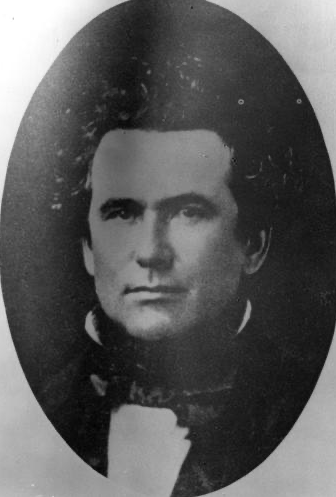
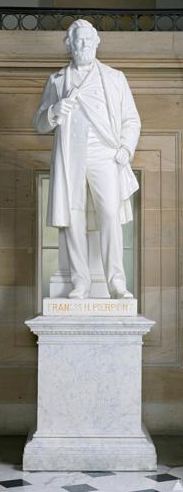
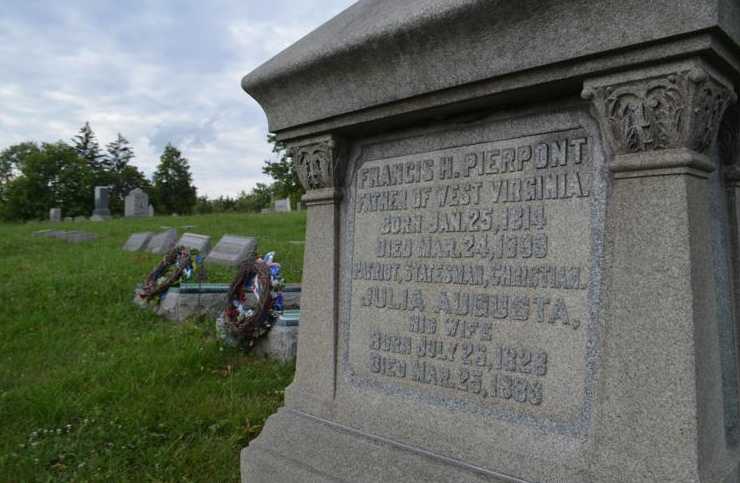
Francis Pierpont: The unheralded ‘Father of West Virginia’
Francis Harrison Pierpont, the “Father of West Virginia,” was born in Monongalia County, not far from Morgantown, which was established by his grandfather. But he spent much of his life in Marion County, where the family moved when he was a young child.
Travis Henline, the former manager of Independence Hall in Wheeling, said Pierpont is one of the most important historical figures in West Virginia’s history.
“One of the things that surprises me the most about Francis Pierpont is that when you mention him to most people, they don’t know who he is,” Henline said. “He is one of the most unknown figures in West Virginia history, but one of the most important.”
When Pierpont was young, his family moved to Middletown, which eventually became Fairmont, where his father operated a tannery. He had some formal education in a small, one-room schoolhouse, but was largely self-taught.
“He read the classics, like the “Odyssey” and “The Iliad,” the Bible and others, and kind of educated himself,” Henline said. “That’s one of the compelling things about his story, is he came from very humble beginnings. He was not a part of the established Virginian aristocracy. His father was a tanner.”
In 1835, Pierpont entered Allegheny College in Meadville, Pennsylvania. After graduation, he returned to Virginia and began working as a teacher in Harrison County. From there, Pierpont was appointed to a teaching academy in Mississippi.
“In Mississippi, he was confronted for the first time by the horrors of slavery,” Henline said. “When he returned to Virginia, he was a very outspoken abolitionist. He was never a politician, but he was very vocal.”
During that time teaching, Henline said Pierpont also began to study the law.
“Back then, there weren’t very many established law schools,” Henline said. “You would just read the law and sometimes serve an apprenticeship with an attorney, and then you would take the bar exam.”
Pierpont eventually became the lead counsel for the Baltimore and Ohio Railroad, as well as practicing law in private.
“He was also an entrepreneur,” Henline said. “He worked as a brick manufacturer and he owned interest in a coal mine. And of course this was on top of practicing as an attorney.”
In 1861, the Civil War began, and Virginia voted to secede from the Union.
“At this time, people in western Virginia were trying to decide what to do,” Henline said. “There were a couple huge meetings in Clarksburg, one for Unionists and one for Confederates. Then, on May 13, the First Wheeling Convention was held. Western Virginia was going to try to differentiate itself from Virginia, because most of the northern counties did not want to secede. Not much came of that convention, so they disbanded and decided to come back in a more formal way. Pierpont was at the convention and returned to his home in Fairmont. One night, he’s reading the Constitution in his study, and his wife hears him exclaim ‘Eureka! I have it!’
Pierpont had been looking at Article IV of the Constitution, which says in Section 3 that for a new state to be formed, it must receive permission from its parent state and from Congress.
“Pierpont’s plan was that they would form a new government of Virginia which was loyal to the United States,” Henline said. “The idea was that because the Virginian government had seceded, they were no longer the legitimate government of Virginia. Pierpont wanted to establish a Union government in Virginia, and then from that position, they would give themselves permission to become a new state. But they needed Congress to buy into it, they needed President Lincoln to buy into it, and they needed the people to buy into it.”
In June of 1861, Pierpont brought his idea to the Second Wheeling Convention, where he was unanimously elected to serve as the governor of what was called the Reorganized Government of Virginia.
“We know today that June 20, 1863 is the day West Virginia officially became a state,” Henline said. “But June 20 is a significant date for another reason as well. Two years before that, on June 20, 1861, Francis Pierpont was sworn in as the governor of the Reorganized Government of Virginia.”
The establishment of the Reorganized Government of Virginia marks the first and only time in American history that a state’s citizenry attempted to establish a new government.
“This was an unprecedented action,” Henline said. “But of course it was in the midst of an unprecedented Civil War. These were unprecedented times in the U.S. and nobody knew what was going to happen. Pierpont once referred to this as the fearful experiment, because any number of things could have gone wrong.”
After being sworn in, Pierpont immediately called for aid from President Lincoln, who provided it. After no small amount of debate, Congress seated two new U.S. senators and five U.S. representatives from the newly established government.“In essence, this meant that both the president and Congress had acknowledged that the government was legitimate,” Henline said
The US History and Civics exams required by W.Va. Code §18-2-9 will open on November 21, 2022 for the fall semester. Please reference our attached FAQs document for further details. We happy to assist with any issues or questions about the exams.
The Golden Horseshoe information may be found on our student programs webpage.


 Exciting News!
  Engage with the Experts: Dive deep into enlightening presentations by renowned leaders from diverse fields including education, judiciary, and elections. Don’t miss a special guest presentation by a noted WV historic civic education leader!
 Hands-On Learning: Get up close with actual voting machines and unravel the mysteries of our Constitution through an interactive scavenger hunt!
 Complimentary Treats: Enjoy a delightful box lunch on us! Plus, we’re offering mileage reimbursement for one vehicle – because every journey to knowledge should be rewarding.
 Collaborative Learning: Join forces with students, teachers, administrators and community members all united by their passion for civic education.
 Don’t miss out! Complete this Registration Form before Friday February 16th ,2024. Let’s make learning civics an unforgettable adventure. To make room for friends around the state, a maximum number persons from any school/organization is 4, unless a specific request is made to Tom.Tinder@outlook.com. You may also contact Tom.Tinder@outlook.com for additional information.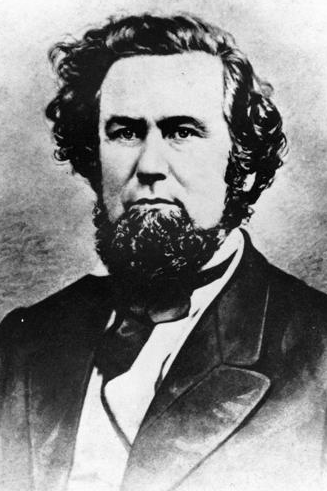

 Social Studies Resources
You must be logged in to post a comment.